

1

Applications
Automotive
The automotive industry is a key driver of innovation and technological progress. Materials play a decisive role across all vehicle systems – from structural components and powertrains to safety and efficiency. With the transformation toward sustainable mobility, material innovations are at the forefront, enabling lightweight design, energy efficiency, and alternative propulsion technologies. The range of materials spans high‑performance metals, functional polymers, and advanced composite materials. In this way, we make a significant contribution to the development of sustainable, safe, and high‑performance vehicles for the mobility of the future.
Market trends
Lightweight construction and material efficiency
Electric mobility and battery storage
Sustainable materials and recycling
Thermal management and energy efficiency
Aesthetics and functional integration
Alternative propulsion systems (e.g., hydrogen)
Focus Areas for Materials
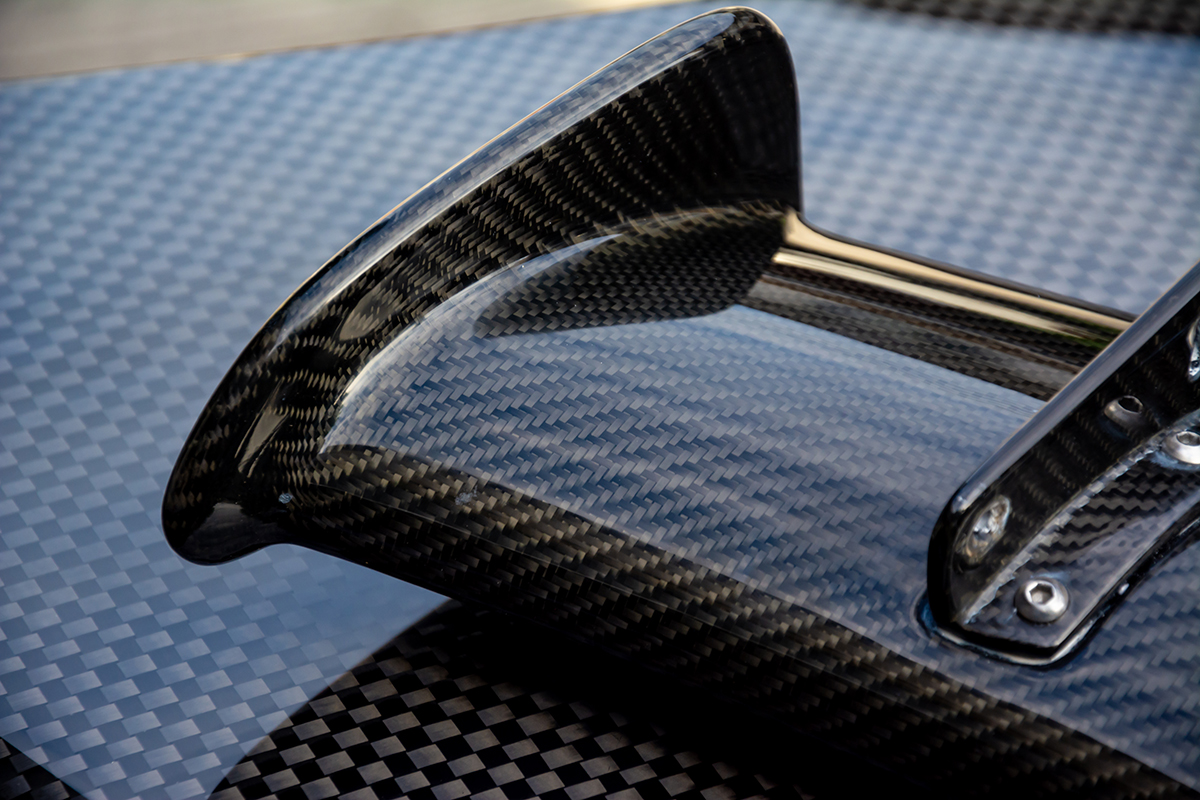
Innovative lightweight construction for the automotive industry – through smart material combinations and targeted further development.
Lightweight construction
Lightweight materials are essential for efficient vehicle construction. They reduce weight, increase range, and improve safety. Our focus is on plastics polymers, fiber-reinforced composites, metals, and foams.
Polymers enable efficient lightweight construction in automobiles with high design freedom and thus constructive lightweight construction. Fiber-reinforced plastics offer even higher strength at low weight and optimize load-bearing structures as well as battery housings. Metal alloys such as high-strength steels, aluminum, and magnesium combine stability with corrosion resistance and enable sustainable manufacturing processes. Foams and porous materials provide crash safety, thermal insulation, and acoustic damping.
We continuously advance these materials and intelligently combine material concepts to provide future‑oriented, sustainable lightweight solutions for the automotive industry.
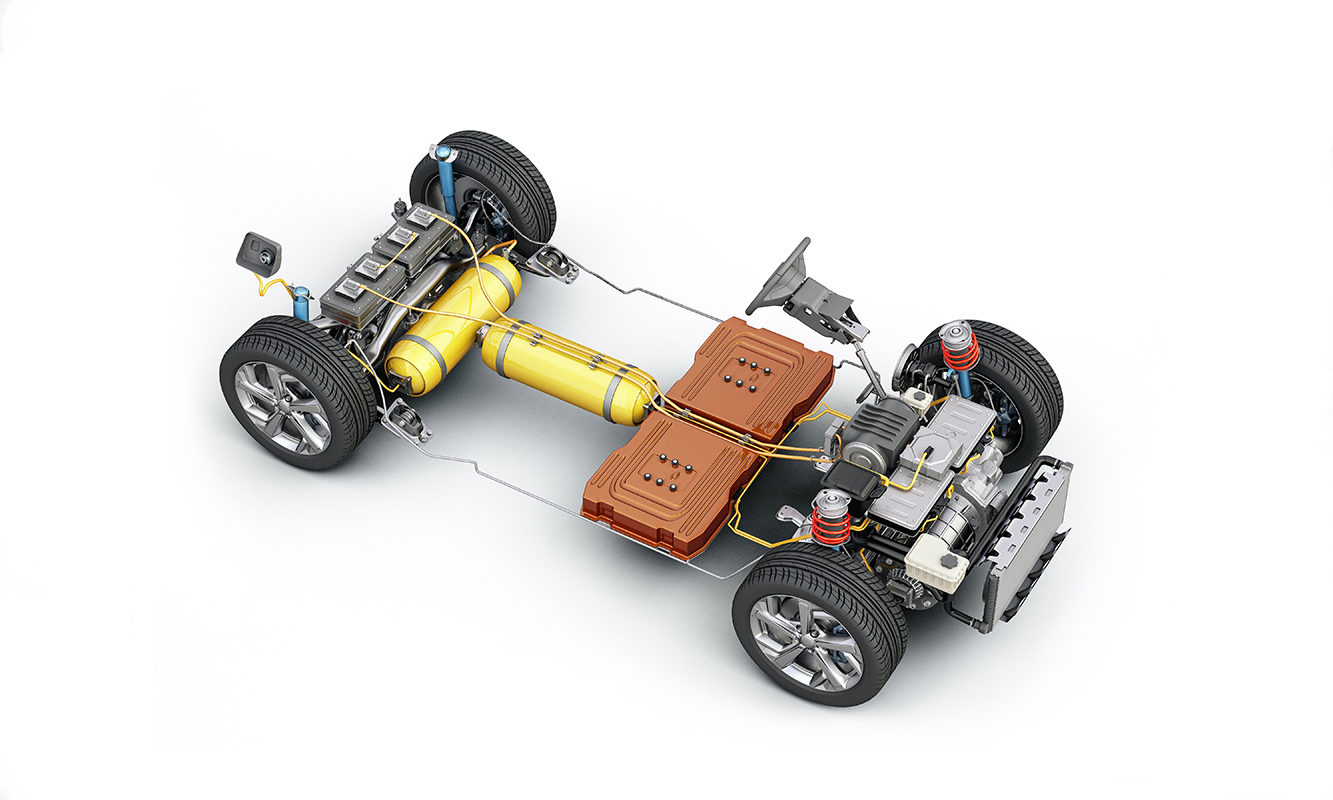
Safe energy storage starts with the material – lightweight, robust, and application-optimized.
Battery systems and alternative drives
Efficient energy storage requires optimized material and multi-material solutions. With our cross-material expertise, we offer a holistic development from material formulation to component manufacturing to testing.
A particular focus is on battery housings, which must be lightweight, crash-safe, and thermally optimized. By employing fiber‑reinforced polymers and hybrid materials, we develop mechanically robust and fire‑protection‑optimized solutions featuring innovative layer architectures and tailored material formulations.
For hydrogen storage applications, we optimize fiber-reinforced pressure vessel structures (type IV and V) to enhance safety and payload. Our developments improve fiber-matrix systems, winding processes, and long-term stability, enabling higher-performance hydrogen storage systems.
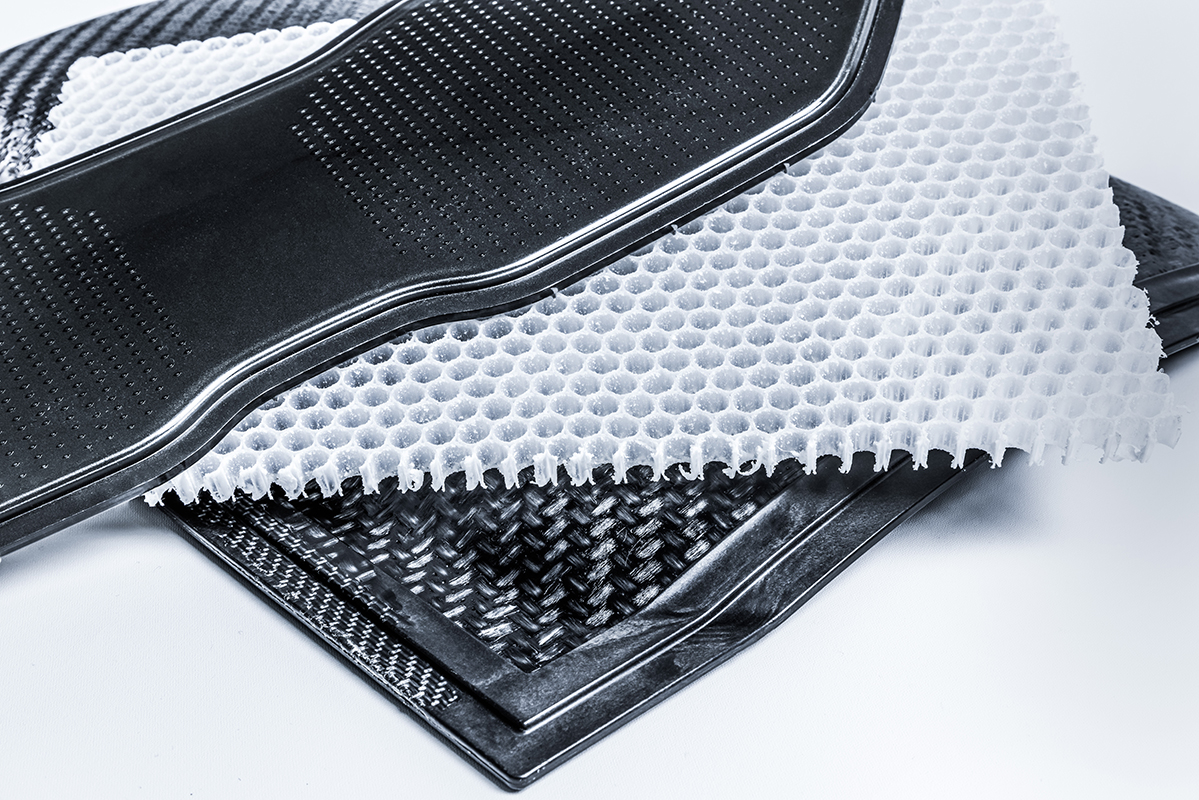
Recyclates cleverly used – for functional and environmentally friendly vehicle components.
Sustainability and recycling
Sustainable materials are essential for resource-saving automotive production. Our focus is on recyclable polymers and metals used in exteriors and interiorsapplications.
Post-industrial and post-consumer plastics as well as composite materials are used in exterior components such as bumpers and cladding. They enable circular production concepts while providing improved mechanical properties. In the interior, the use of recycled polymers is currently limited due to VOC emissions. Therefore, we are working on co-injection possibilities to encapsulate recyclates in virgin materials as well as on deodorization and removal of volatile components in recyclates.
Secondary aluminum and secondary steel also make a significant contribution to resource conservation while offering high mechanical strength. Our developments enable sustainable, series‑ready material solutions for the automotive industry.
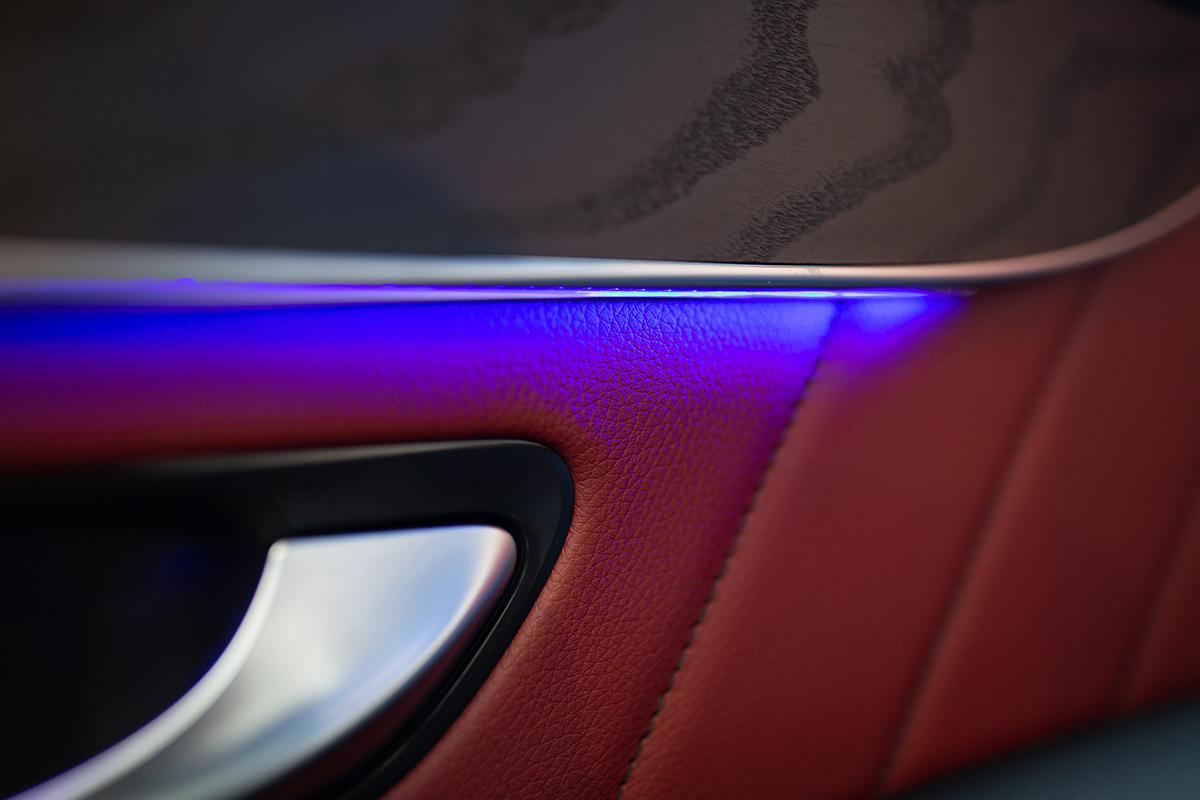
Aesthetics meets technology – innovative finishing for durable and interactive vehicle surfaces.
Aesthetic and functional surfaces
Surfaces in vehicle construction significantly contribute to design, function, and user experience. Scratch resistance, UV resistance, and ease of cleaning are at the forefront alongside individual design options. Polymers offer a wide range of possibilities through structured, matte, or high‑gloss surface finishes. Smart surfaces enable new interactions through light- or touch-based reactions. We develop solutions that seamlessly combine design and engineering: metallization for electromagnetic functionality, scratch‑resistant direct coating using PUR systems, and the integration of electronic functions directly within the injection molding process. Our technologies transform surfaces into intelligent interfaces between users, technology, and design.