

2
Technologies
Additive manufacturing
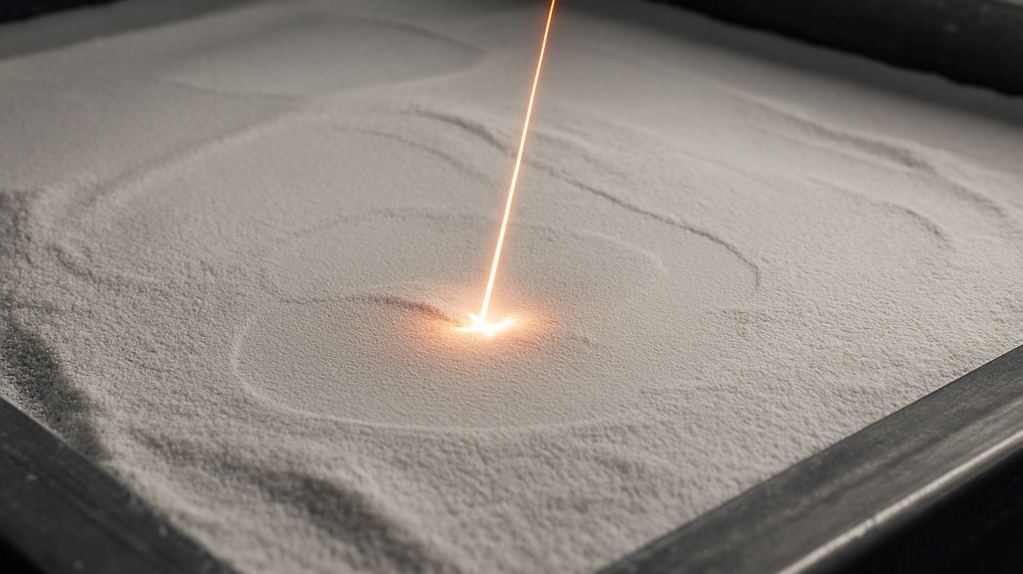
Additive manufacturing is a key technology in modern production, enabling the fabrication of highly complex components with customized properties. Additively manufactured parts already play a central role in various industries, such as automotive engineering and aerospace. We offer cross-material technologies for metals and plastics. Our focus is on innovative materials and processes, particularly in the areas of industrialization and automation. This results in sustainable, high‑performance solutions for the industry of tomorrow.
Competencies
Cross-material and cross-technology manufacturing expertise
Development and qualification of materials and processes
Plants in a wide range of sizes
Development of component designs
Online process monitoring and data acquisition
Automated production lines including downstream processes
Sampling, prototype production, and pilot series
Processing overview
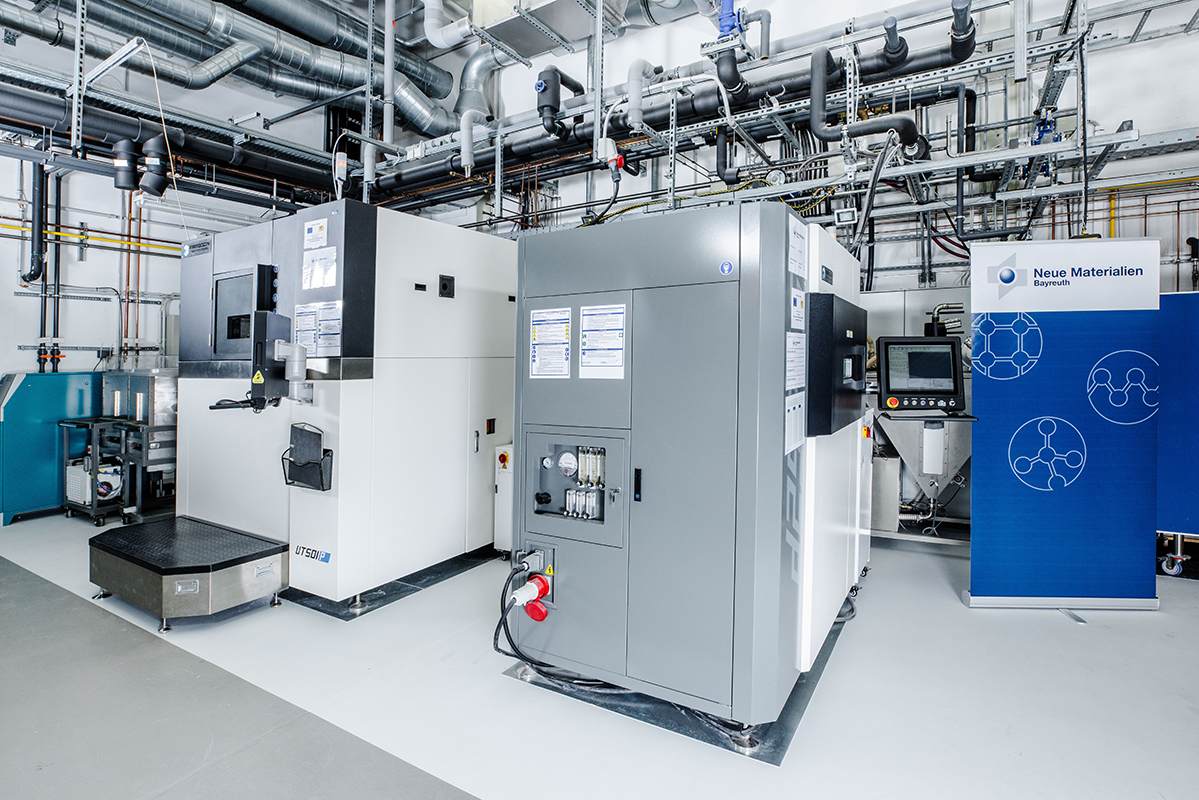
SLS: Design freedom and precision for industrial applications – efficient and scalable.
Selective Laser Sintering (SLS)
Selective Laser Sintering (SLS) is a powder‑bed–based additive manufacturing process in which polymer powder is sintered layer by layer using a laser. It enables tool‑free production of highly complex components without support structures and offers extensive design freedom. Thanks to its strong scalability, SLS is suitable for both prototyping and series production in industries such as aerospace, automotive, medical technology, and mechanical engineering.
We operate Farsoon SLS systems, providing access to a broad portfolio of powder materials and process parameters. Advanced quality‑assurance tools ensure consistently high part quality. Our focus is on industrialization and automation in order to deliver efficient, reproducible, and adaptable solutions for industrial applications.
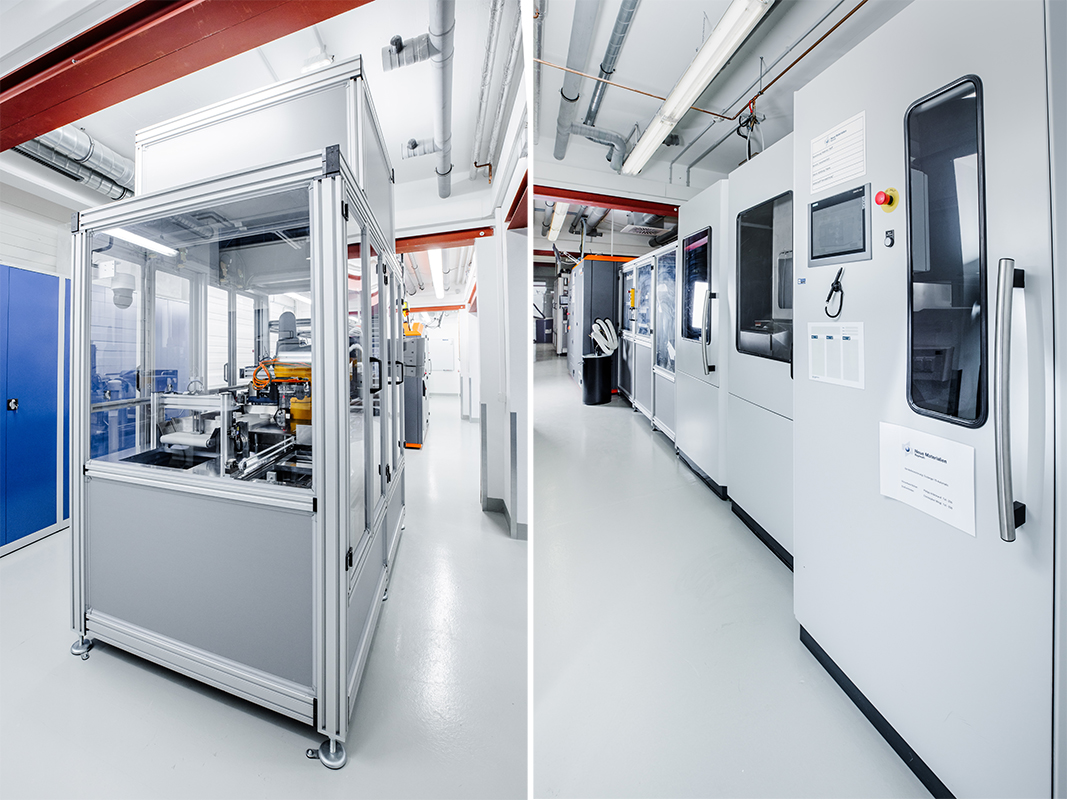
SLS demo factory: Automated, digitally connected, and ready for sustainable series production.
SLS demo factory
Reduced manual intervention, digital process control, and innovative cooling strategies promise lower manufacturing costs while enabling targeted part optimization. We therefore operate a novel SLS demo factory that integrates the entire SLS process chain through automation, process monitoring, and digital control. Inline analytics ensure quality, minimize scrap, and increase reproducibility. Powder‑processing strategies aim to achieve a recycling rate of up to 85%. A unique feature is the close integration of state‑of‑the‑art process technology with digital manufacturing environments.
In addition to materials science topics, the demo factory focuses on digitalization and automation along the entire production chain. An IoT platform and part‑marking systems capture process data in real time. As a technology demonstrator, the SLS demo factory supports industrial partners in exploring new materials and strengthens sustainable SLS production.
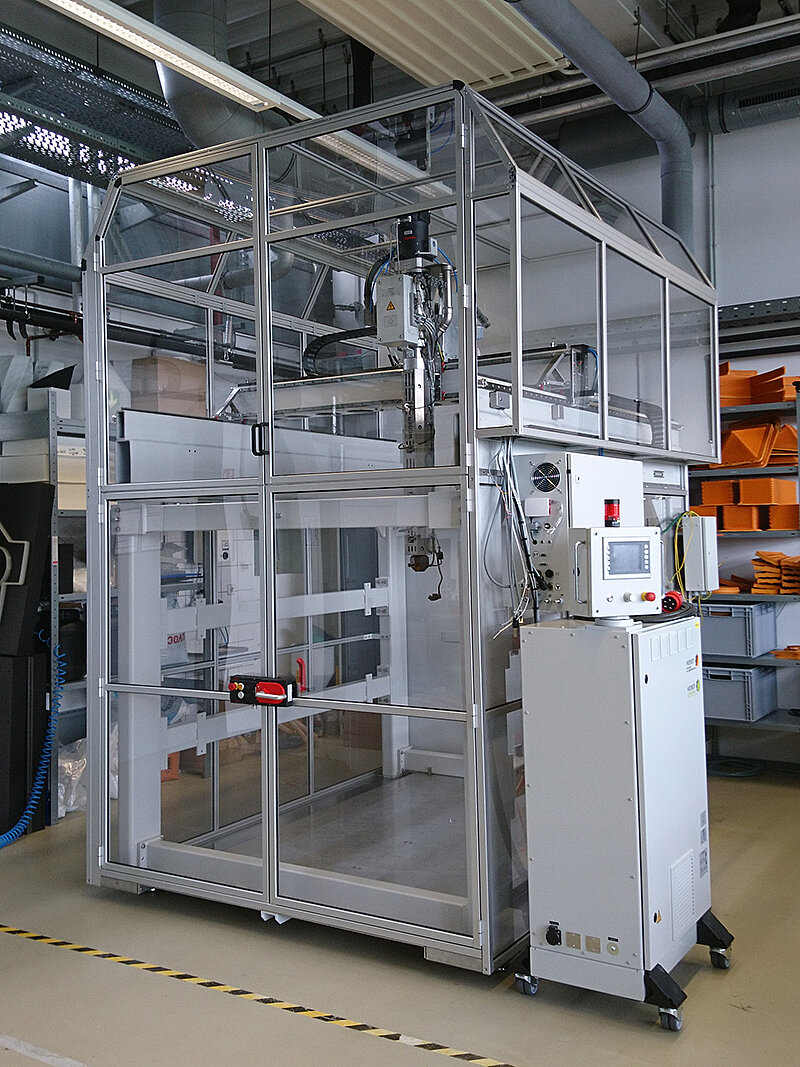
Efficiently manufacturing large-scale structures – with LAAM and integrated process monitoring
Large Area Additive Manufacturing (LAAM)
To ensure the cost‑effectiveness of large components, high deposition rates in additive manufacturing are essential. Our Large Area Additive Manufacturing (LAAM) printer is an in‑house development that offers maximum freedom in material selection and process control. This allows a wide range of polymer materials to be processed, while process parameters can be precisely adjusted to achieve optimal part properties.
The integrated thermal camera for monitoring temperature distribution enhances process control, improves layer adhesion, and minimizes warpage. Full control over both hardware and software enables flexible development and implementation of innovative process strategies.
The large build volume allows the production of complex, large‑scale structures. The LAAM printer is particularly well suited for applications such as mold making, lightweight construction, or functional prototypes. As a research platform, it supports industrial partners in developing new material and process strategies and contributes to flexible and scalable manufacturing.
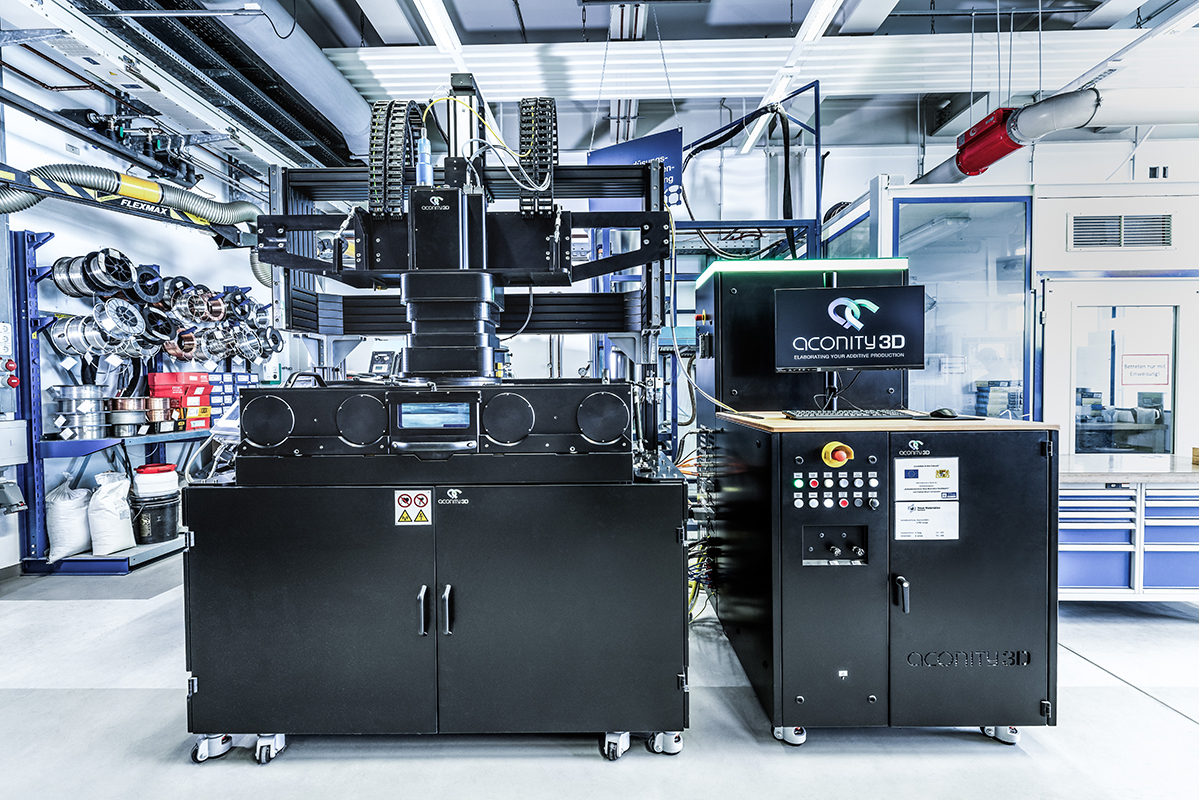
Laser Powder Bed Fusion (LPBF) system
Laser Powder Bed Fusion (PBF-LB/M)
Laser Powder Bed Fusion (PBF‑LB/M) is a process for building complex structures layer by layer and is currently among the most innovative technologies on the market for metallic materials. The achievable part properties and quality depend significantly on the weldability of the materials and the stability of the melt process.
We offer the capability to print both conventional and customized powders using topology‑ and weight‑optimized designs. High build‑chamber heating up to 1000 °C enables the production of crack‑free and low‑stress components. In‑situ monitoring, particularly for oxygen levels, further supports print quality.
To develop innovative and resource‑efficient products and components, we leverage our expertise in simulation‑ and data‑driven development.
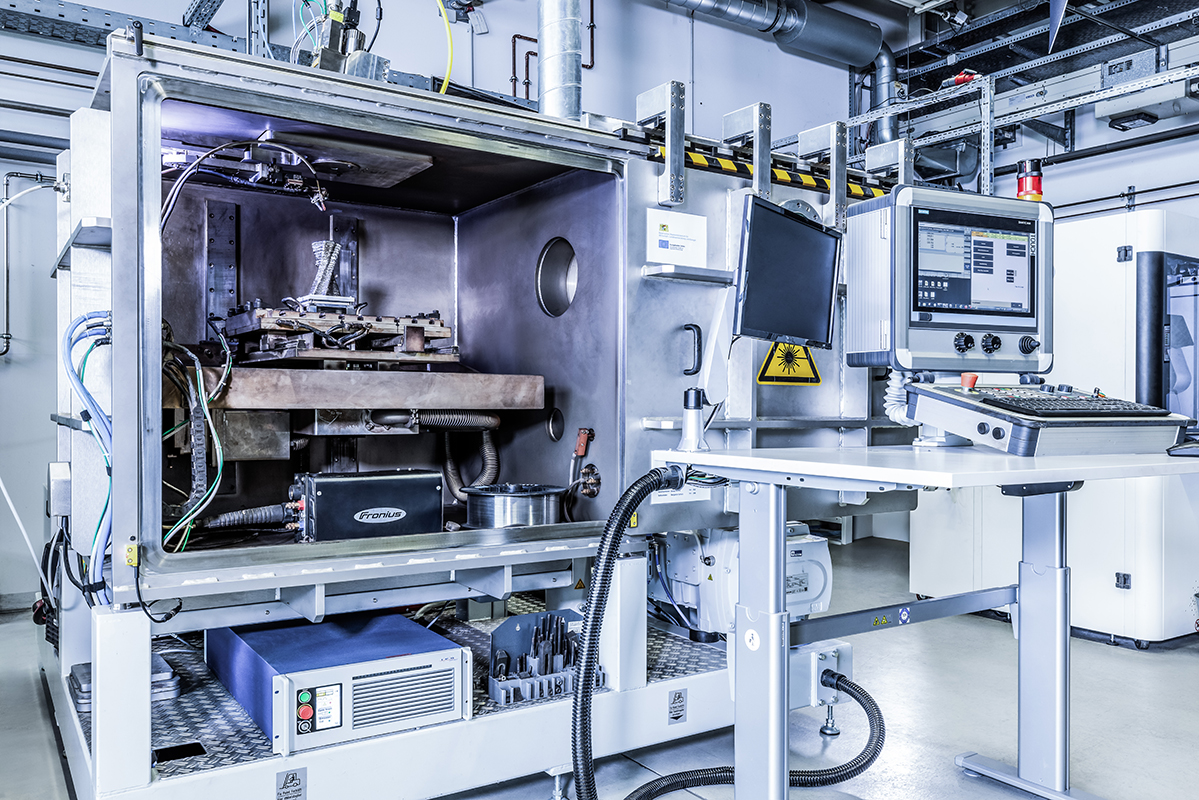
Direct Energy Deposition (DED) system
Direct Energy Deposition (DED-LB/M)
Wire‑based Direct Energy Deposition provides a cost‑effective alternative to powder‑based additive manufacturing, as it uses more affordable metal wires for layer buildup. A high deposition rate of up to 2 kg/h enables fast printing of large components.
In‑situ alloying of commercially available wires opens up new innovation opportunities for German industry. During the process, targeted new compositions with significantly improved material properties are formed.
We operate a resource‑efficient process chain spanning from material simulation to thermal in‑situ monitoring, combined with data‑driven processes, to support a wide industrial spectrum—from aerospace to tool manufacturing.
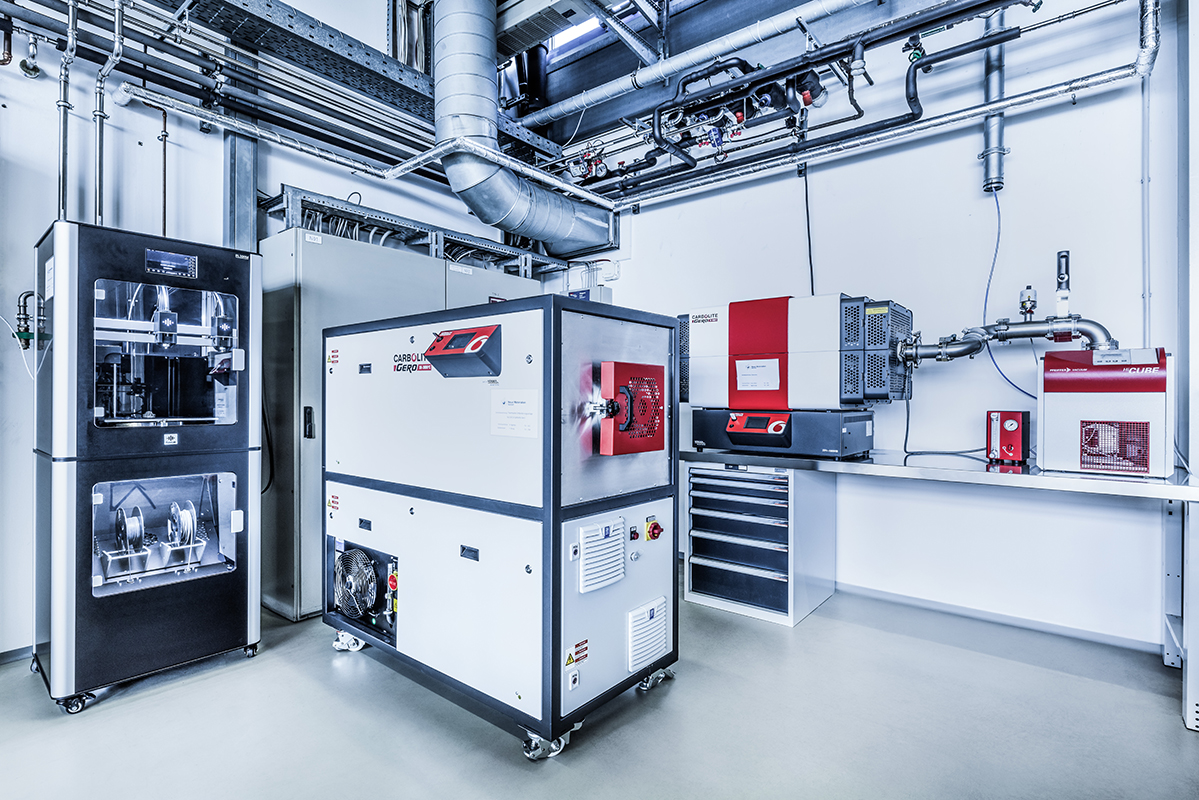
Fused Filament Fabrication system
Fused Filament Fabrication (FFF/M)
In Fused Deposition Modeling (FDM), metal filaments are used as the feedstock material. Compared to laser‑based processes, FDM offers the advantage of printing at very low temperatures below 200 °C. The process is suitable for producing crack‑free components from materials that cannot be welded.
The printing of hybrid materials made from metallic and ceramic feedstocks is supported through various FFF systems equipped with multi‑extruders. We possess strong expertise in downstream processes ranging from debinding and sintering to heat treatment, with a focus on achieving targeted properties of the printed components. Additionally, we are able to produce filled filaments in‑house, enabling a very high level of vertical integration for development projects.
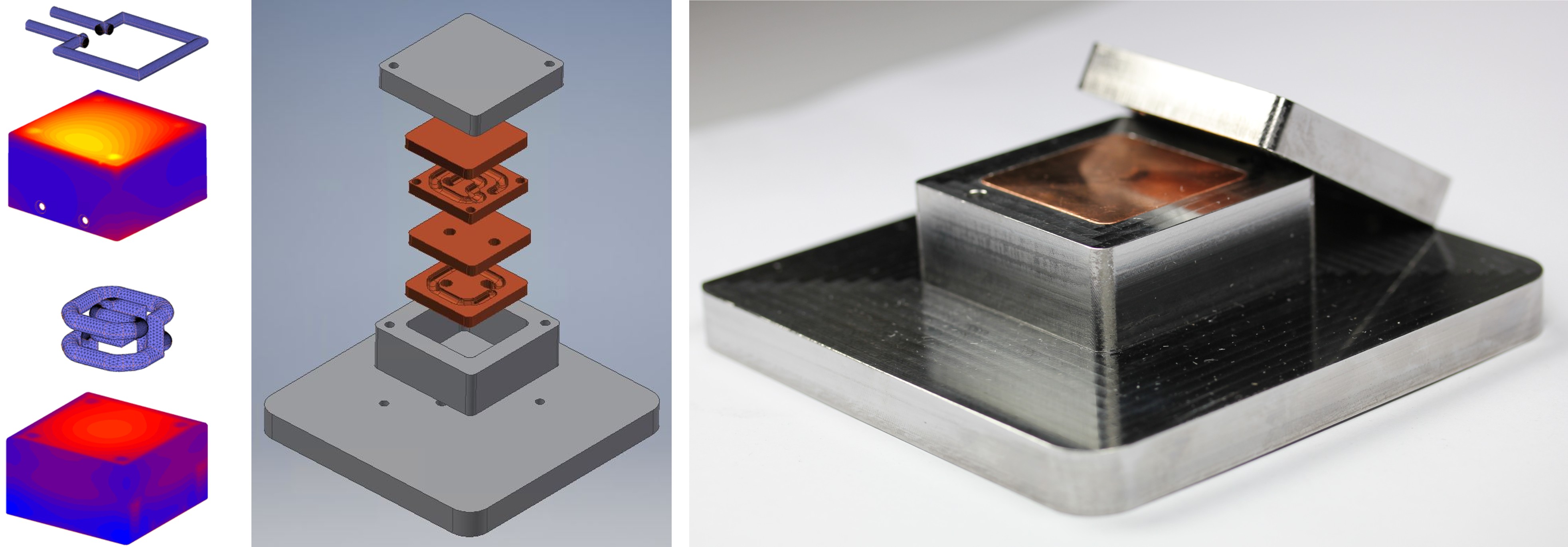
Diffusion Bonding (DB)
Diffusion Bonding (DB)
Tools with conformal cooling systems are frequently produced additively — however, conventional manufacturing methods make this process time‑consuming and expensive. We offer the capability to design and manufacture 3D tools with conformal cooling channels using diffusion bonding. This process enables the production of complex and large tools at significantly higher speed compared to traditional machining and additive manufacturing approaches.
Diffusion bonding is based on the use of commercially available, pre‑cut metal sheets. These are joined either with a brazing alloy (diffusion brazing) or solely through applied pressure (diffusion welding). With our extensive simulation expertise, we ensure optimal tool design with efficient cooling performance and a homogeneous thermal distribution. As a result, your components are largely warp‑free and low in residual stress.
Furthermore, we offer the option to manufacture and develop tools either from a single material or with additional cooling channels made from aluminum or copper to further enhance cooling performance.