

1
Case StudypcrExteriA
Post-Consumer Recyclates for Automotive Exterior Components
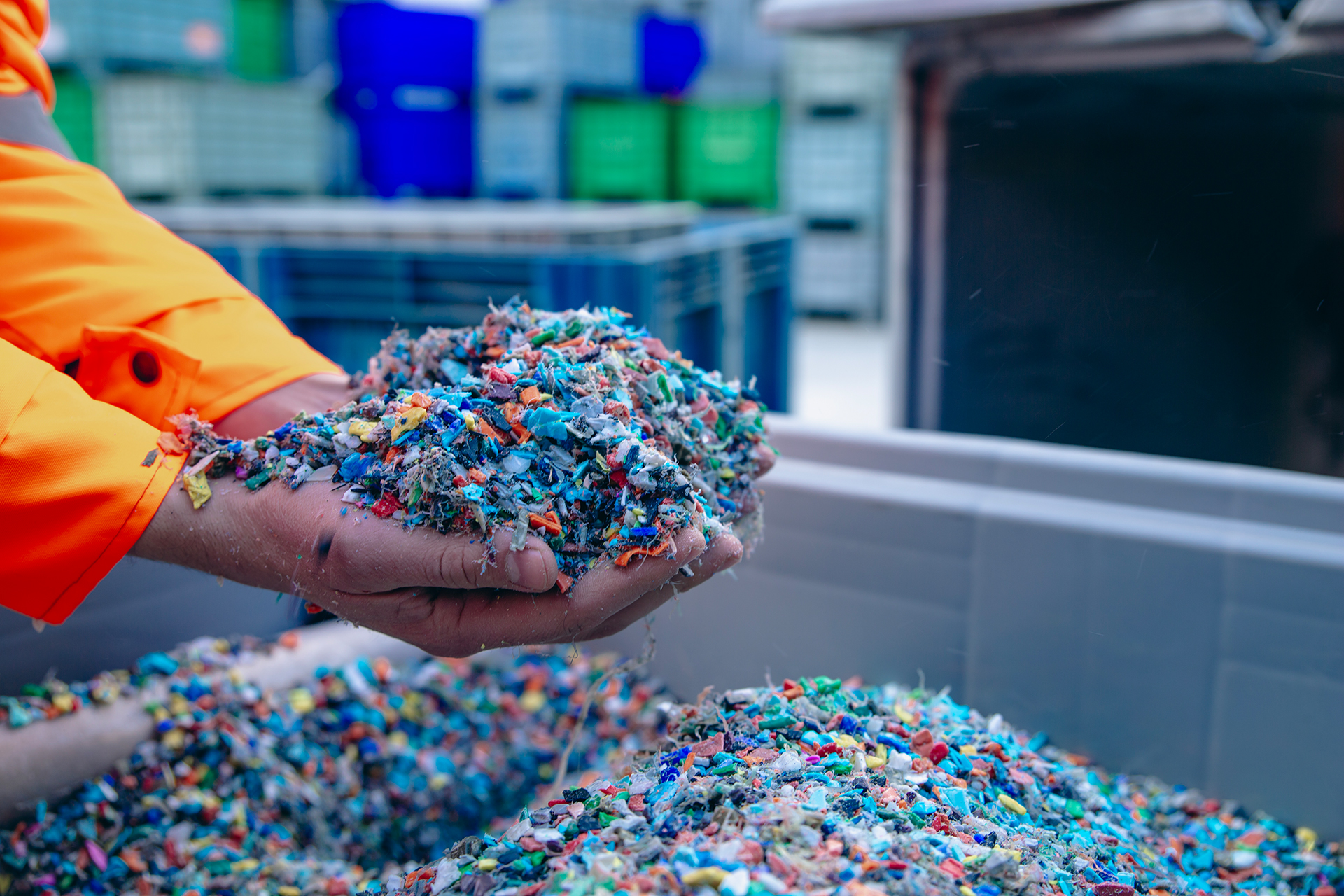
In the joint project "pcrExteriA", innovative special processes in injection molding are being specifically further developed to make post-consumer recyclates (PCR) usable for high-quality exterior plastic components despite their sometimes highly fluctuating quality. The goal is to produce components with as high a PCR content as possible, whose mechanical and optical properties are comparable to those of new materials.

Approach
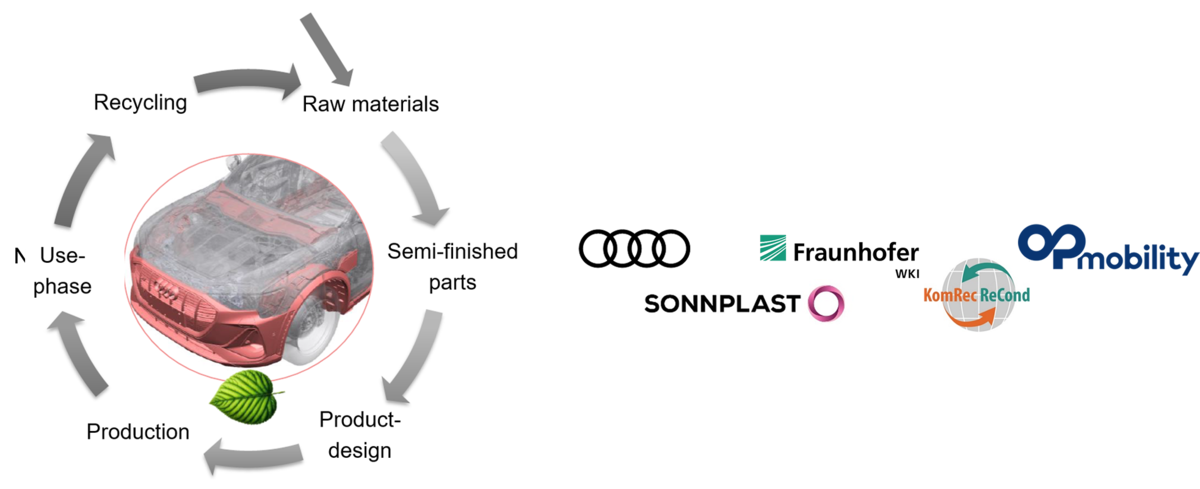
The industrial use of recyclate is a crucial key to more sustainability in the automotive industry. Even visually and mechanically demanding exterior components in the automotive sector can be efficiently and high-quality produced from post-consumer recyclates.


Motivation
Increase in Recyclate Content
Recycled plastics are becoming increasingly important in automotive construction, as sustainability and resource conservation are coming more to the forefront. New EU regulations are pushing for the use of recyclates and putting pressure on automotive manufacturers to act. In the coming years, the proportion of recycled plastics in vehicles will noticeably increase and make an important contribution to more sustainable production.

Solution Approach
PCR in Exterior
There is great potential for the use of post-consumer recyclates, especially in the area of exterior components. By combining optimized processing methods for recyclates and new technologies for the production of components, high-quality components with simultaneously high recyclate content of well over 25% are to be achieved. Special focus is placed on the targeted combination of recyclate and new material, where the recyclate is used as the core and the new material as the skin of the component.
Approach
Further Development of Special Injection Molding Processes
- Further development of special injection molding processes such as the co-injection process for processing post-consumer recyclates
- Targeted combination of recyclate with new material based on ecological, economic, and technical criteria
- Data collection along the entire processing and machine learning to optimize the processes used
- Focus on mechanical recycling and proof of closed-loop recycling through the reprocessing of the produced parts
- Economic and sustainability assessment of all processes along the entire process chain
Project sponsor: Federal Ministry for Economic Affairs and Energy (BMWE) | Funding code: 19S24002C
Partners: AUDI AG, OPmobility GmbH, KomRec-ReCond GmbH, Sonnplast Solutions GmbH, Neue Materialien Bayreuth GmbH and Fraunhofer Institute WKI