

1
Materials
Recycled materials
Recycled materials are the key to a resource-saving future. In addition, the regulatory conditions for the use of recyclate are currently increasing massively. Our recycling processes convert post-industrial and post-consumer waste into high-quality materials - from plastics to composite materials and metals to textiles. Through innovative technologies and digital process control, we ensure consistently high quality and enable flexible production solutions. In this way, we make a decisive contribution to the circular economy and sustainable industrial development.
Competencies
Innovative recycling processes
Digital process control
Highest quality standards
Material preparation & analysis
Flexible production solutions
Sustainable circular economy
Materials overview
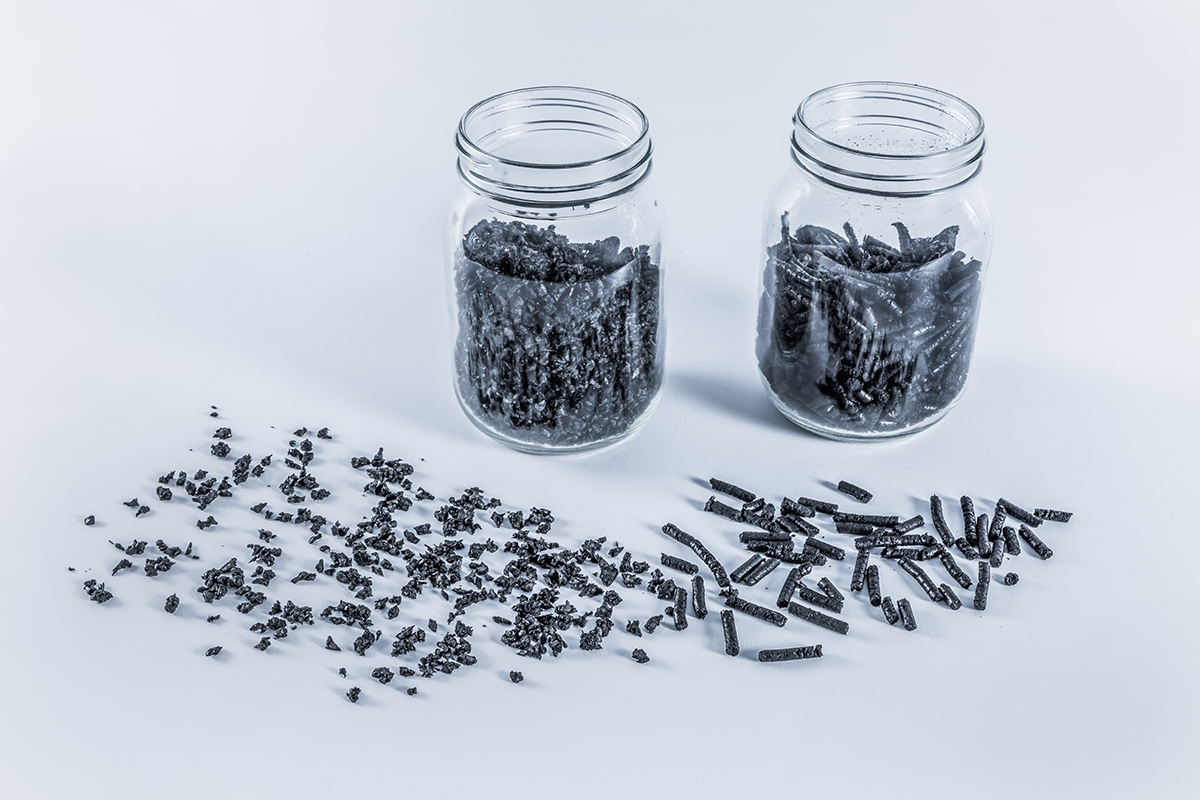
Particle foam shredded and pelletized
Post-industrial plastics
Post-industrial plastics are waste products from manufacturing processes and usually have low levels of contamination due to controlled production conditions. Our processes include precise shredding, reprocessing and recompounding to ensure consistently high material quality. Through the targeted use of digital controls, we continuously optimize the process steps so that the recycled plastics can be fed directly back into high-quality applications. This approach not only offers economic benefits, but also supports sustainable recycling in a wide range of industries.

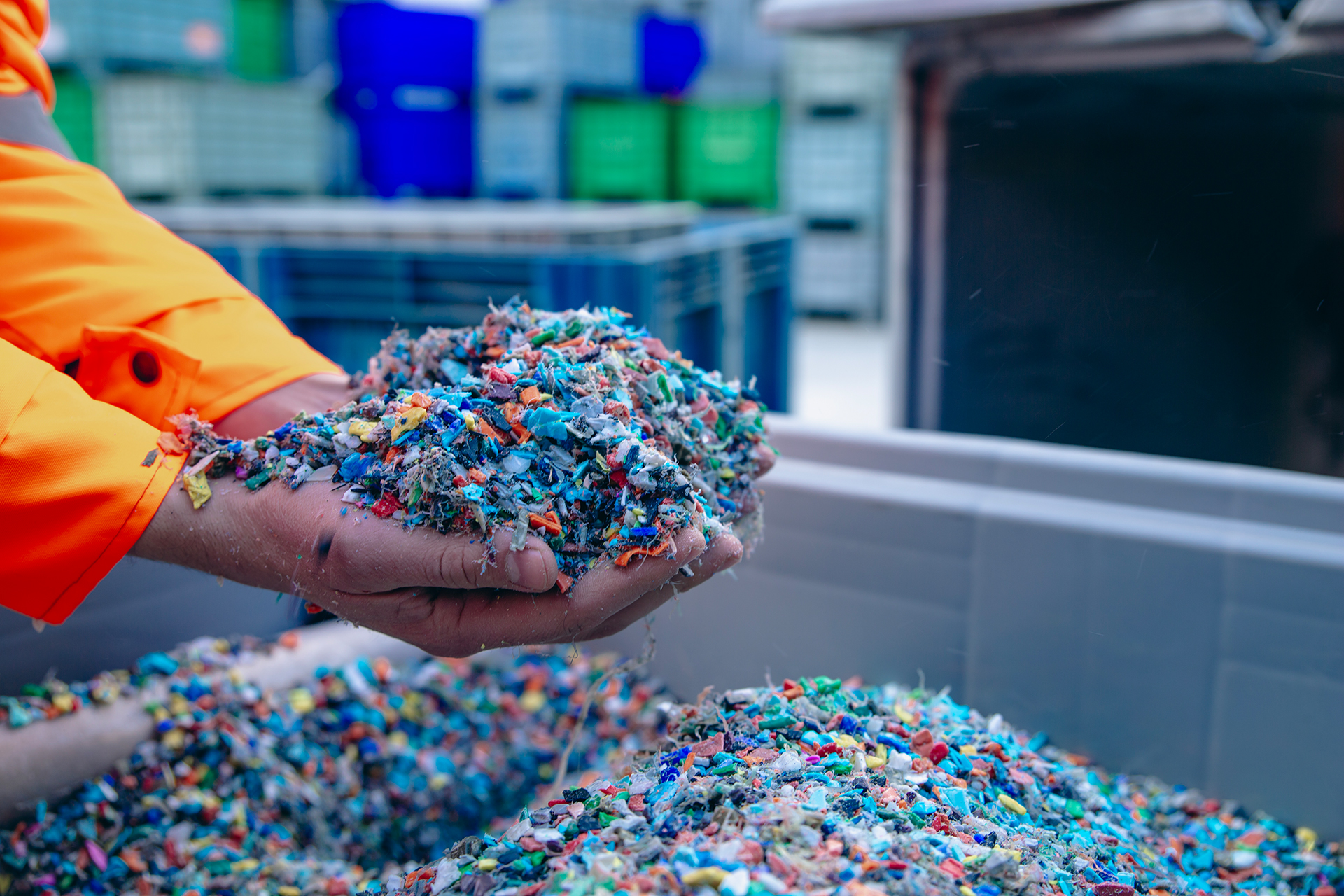
Plastic flakes from post-consumer returns
Post-consumer plastics
Post-consumer plastics come from used products and often have a higher degree of contamination. For this reason, there is a particular focus on intensive washing processes when processing these materials. Our state-of-the-art washing systems work with optimized temperature and drying processes to efficiently remove dirt, label residues and adhesives. This additional cleaning step prepares the plastics for renewed high-quality use, ensuring consistent and reliable quality - even with initially heavily soiled materials.
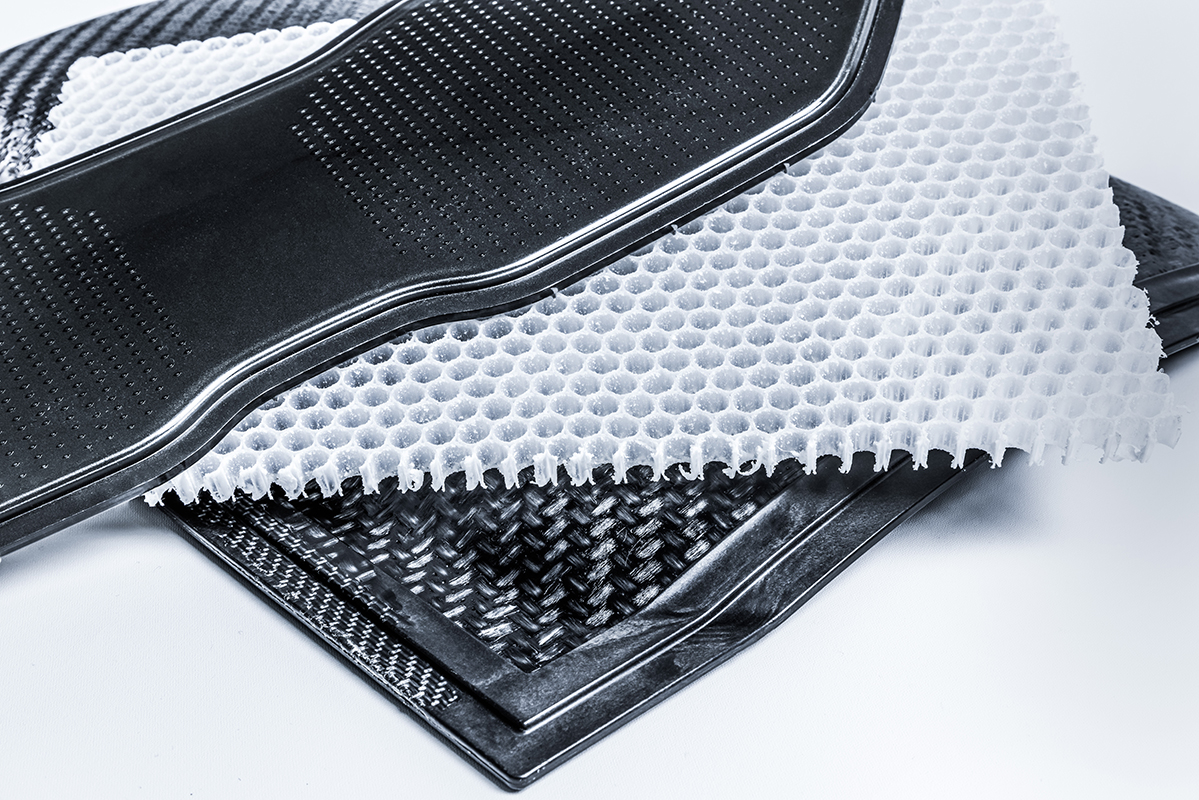
Complex material composites
Composite materials and composite materials
Composite materials pose particular challenges in the recycling process due to their complex composition. Our focus is on the efficient processing of fiber composites with a thermoplastic matrix and the separation of polyurethane in-mold coatings.
Fiber-reinforced plastics with a thermoplastic matrix can be mechanically recycled, whereby shredding leads to a shortening of the fiber length. In order to preserve the fiber properties in the best possible way, we also use chemical recycling processes in which the matrix is specifically dissolved so that the fibers are recovered in almost their original length.
When recycling polyurethane in-mold coatings, our focus is on separating the coating from the underlying component. Through a combination of hydrolysis and mechanical influence, it is possible to efficiently dissolve coatings from a thickness of >0.4 mm so that the components can be processed for further recycling.

Metal powder
Metals
Metallic materials are indispensable in many industries, but the increasing scarcity of raw materials poses a major challenge, particularly in Europe. We focus on resource-saving materials that do not require critical raw materials. With the help of simulation-based development and innovative processing methods for semi-finished products and powders, we develop high-performance materials made of steel, carbide and composite powders. These are primarily used in areas such as coatings and tool technology.
An important focus is on the recycling of waste from additive manufacturing processes. Residual metal powder, swarf and defective components contain valuable raw materials that we process efficiently. We reintroduce these materials into the production cycle by processing them into semi-finished products such as rods or powders. In addition, we use our powder analytics to optimize the use cycle of metal powders in order to ensure the quality of components and conserve resources.
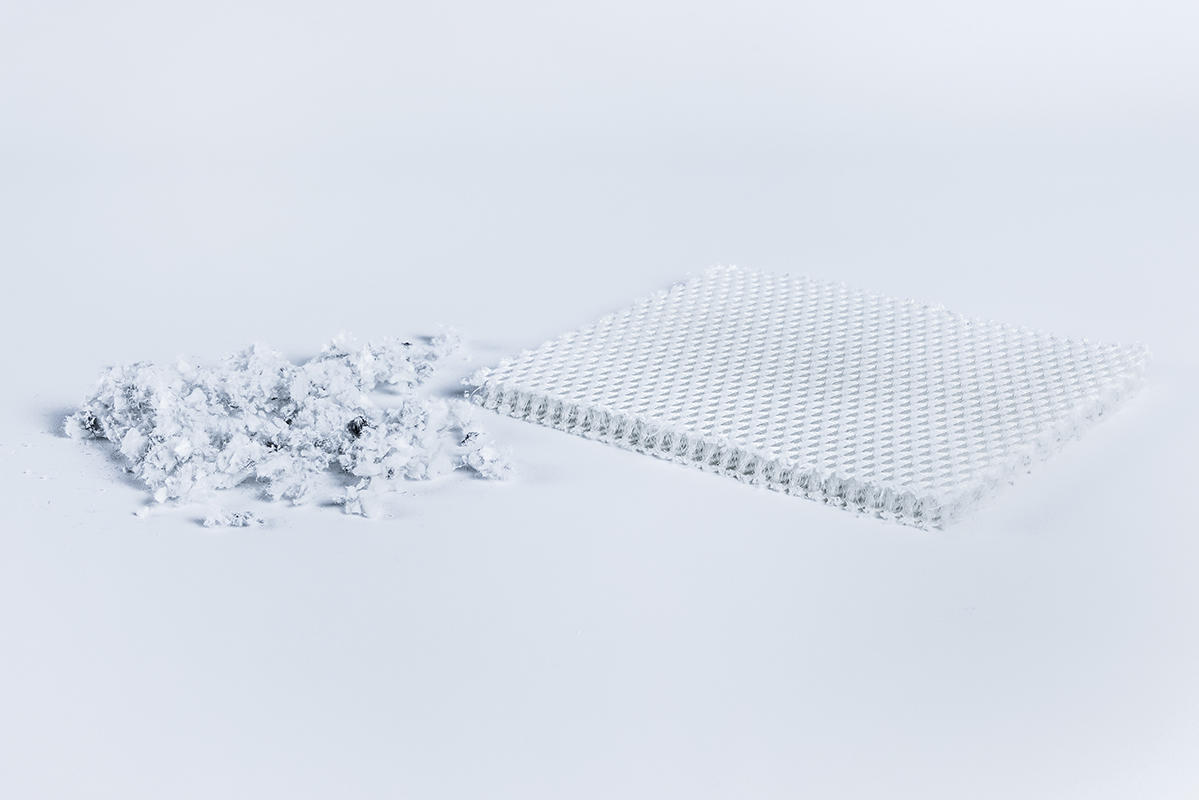
Textile fibers
Textiles / fibers
Recycled textiles and fibers require special processing to ensure optimum processability. A key aspect here is the improvement of solids handling and flowability, which enables precise dosing in industrial processes. Our processes rely on targeted cleaning and subsequent pelletizing to produce a homogeneous material that meets the requirements of modern processing - from new production to innovative composite applications. In this way, we significantly increase the efficiency and quality of the recycled textile fibers.