

1
Technologies
Thermal spraying
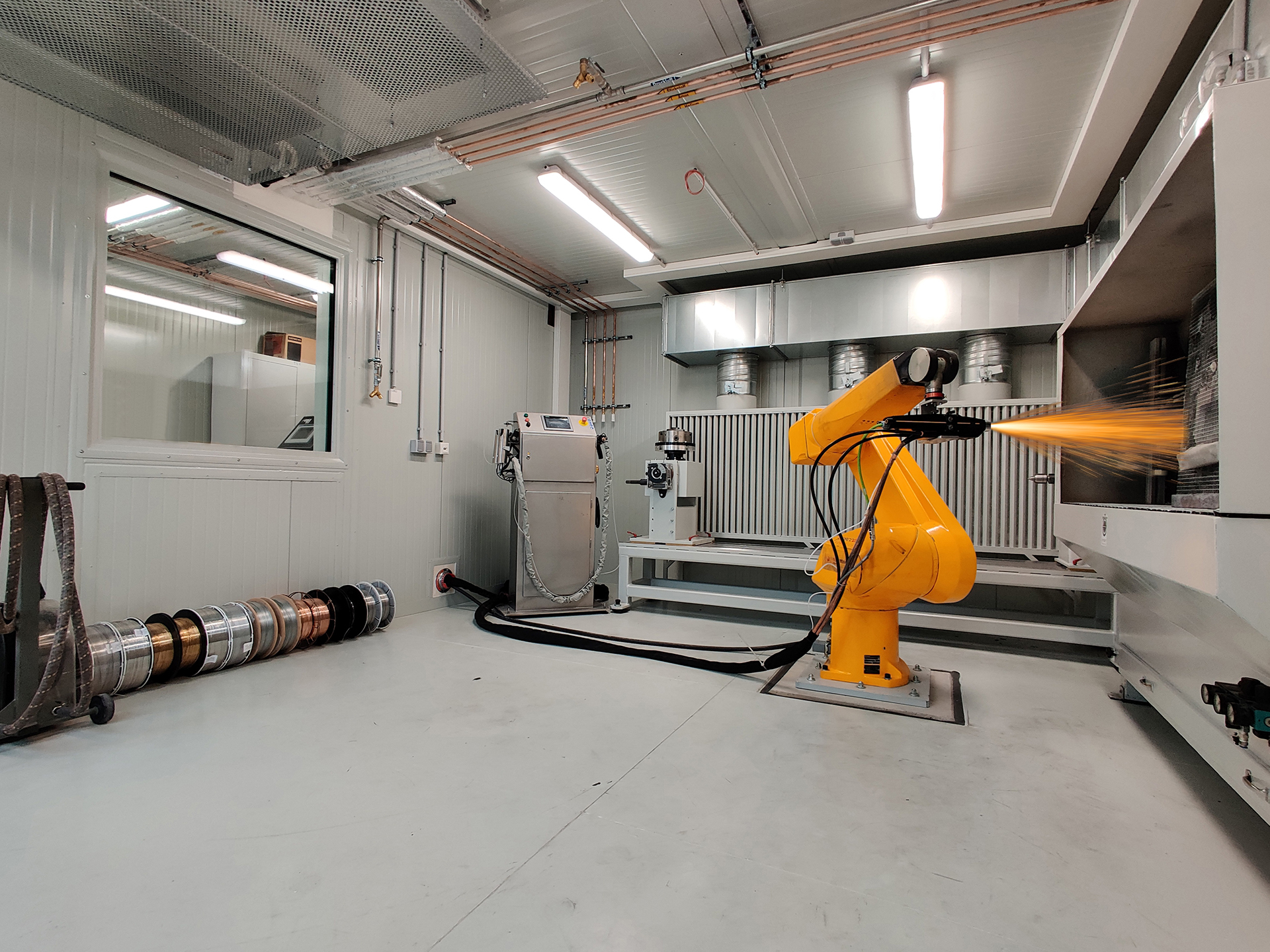
Thermal spraying is an excellent technology for improving the service life, performance, and functionality of industrial components. Thanks to its high flexibility in material selection and application possibilities, it is a forward‑looking solution for numerous industries. Applications range from aerospace and automotive engineering to energy technology. We develop innovative materials and modern coating technologies. Combined with advanced analytics and component testing, this opens up new possibilities for various sectors.
Competencies
A wide range of thermal spraying processes
Materials and process development
Hybrid components (metals, ceramics & plastics)
Process–structure–property relationships
Coating of large and complex components
Programming of robot-assisted processes
Processing overview
Arc spraying
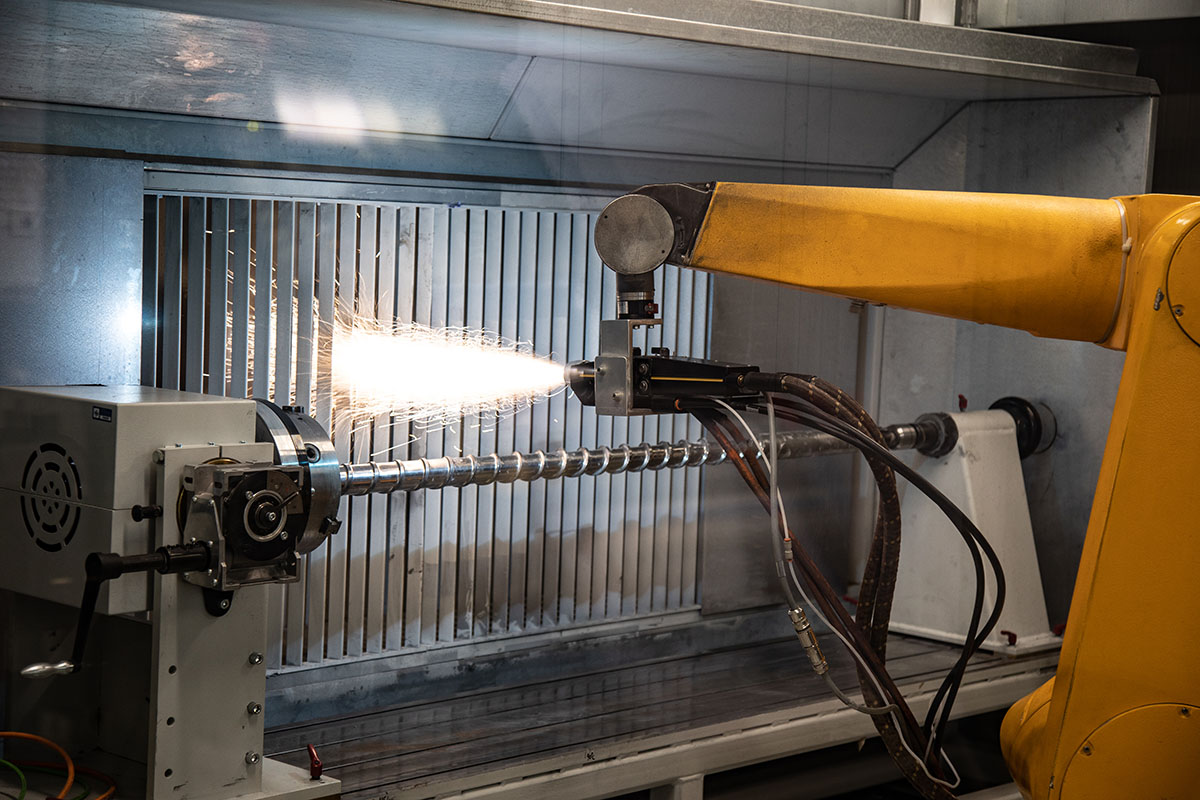
Arc spraying
Wire‑based arc spraying is characterized as an energy‑efficient process, as it does not require complex vacuum technology. The complete consumption of wires minimizes material losses and conserves valuable raw materials. This increases both cost‑effectiveness and environmental friendliness, providing sustainable surface enhancement in the automotive industry, mechanical engineering, and energy technology.
We make an important contribution to expanding the application range of arc spraying through innovative in‑situ material modification of the deposited coatings in addition to surface enhancement. Modern robot‑assisted processes, combined with in‑situ thermal monitoring, enable high precision in coating homogeneous components.
Cold gas spraying
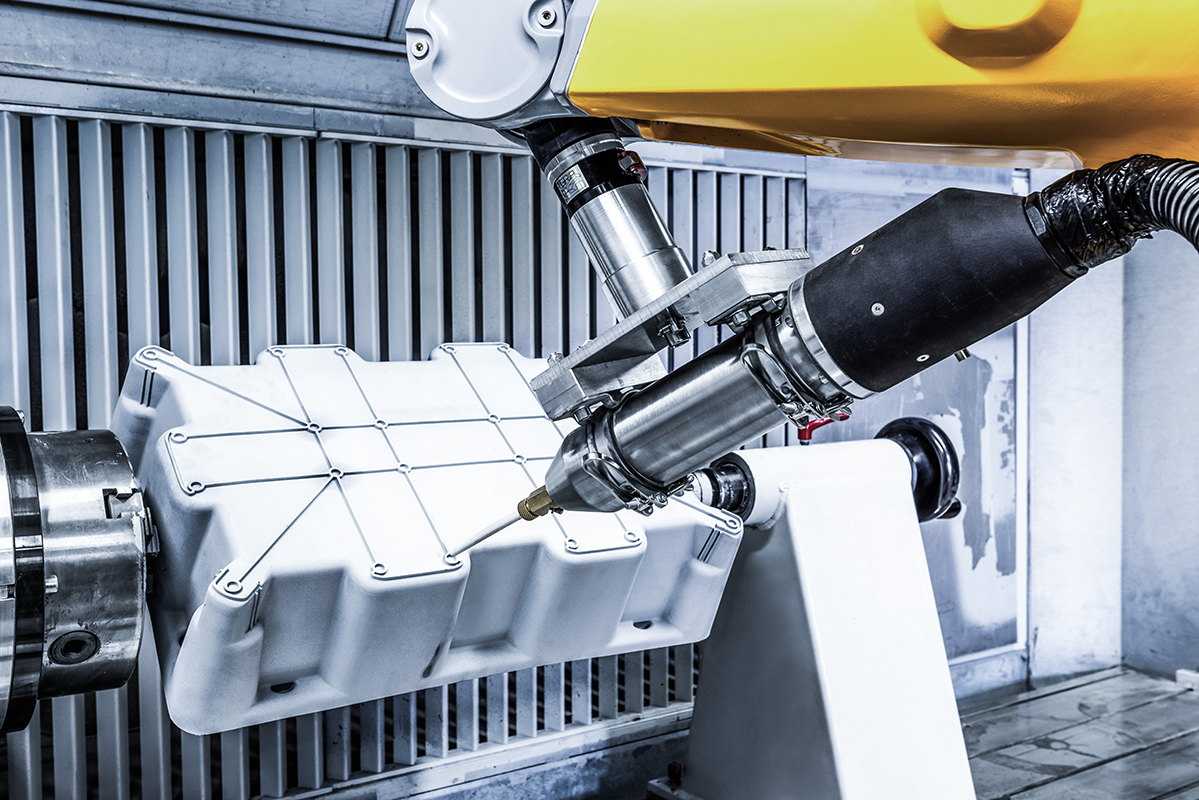
Cold gas spraying
Cold spraying (low- and medium-pressure) is an economical, material-efficient, and gentle process for coating and repairing components. It is particularly attractive for temperature-sensitive materials and applications that require high adhesion strength, making it a valuable technology in industries such as aerospace, automotive engineering, and energy production.
Through our expertise in process development for cold spraying, we enable the metallization of a wide range of plastic components. In addition, we combine cold spraying with arc spraying to achieve high adhesion strength while enabling the rapid deposition of thick coatings.
Plasma spraying
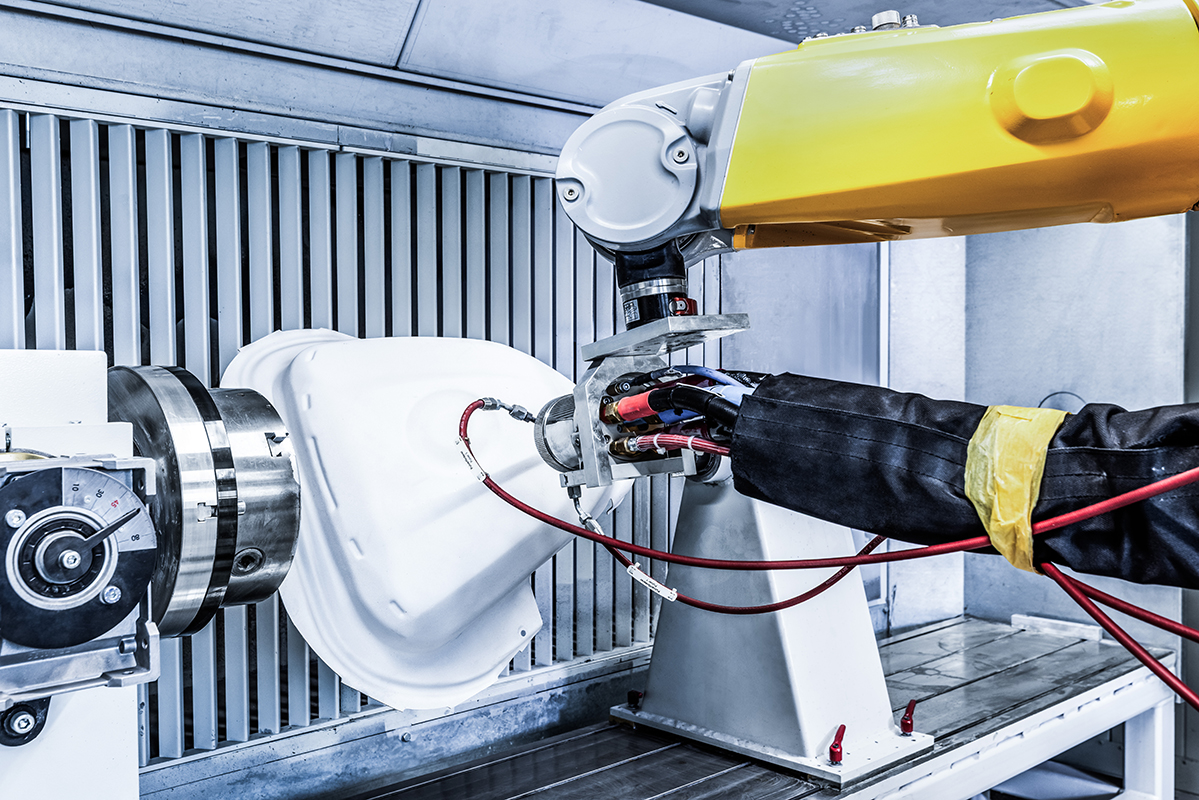
Plasma spraying
Plasma spraying is a powerful thermal spraying process characterized by high temperatures and a wide range of applicable materials. It is frequently used to improve the surface properties of components and to enhance their resistance to wear, corrosion, and high temperatures.
We develop high‑performance coatings through in‑situ material research and the use of customized powders in plasma spraying. These coatings offer significant advantages under extreme operating conditions across various industries. Modern robot‑assisted processes, combined with in‑situ monitoring of temperature and powder velocity, ensure precise coating of homogeneous components.
Equipment
GTV DELTA, MFP 2000
Plasma spraying
| Coating materials | Metals, ceramics, composites |
| Powder feed rate | Up to 600 g/min |
| Powder injection | Radial powder injection for uniform coatings |
| Applications | Wear protection coatings, functional coatings |
| Coating porosity | Low coating porosity < 1% |
Titomic, D623
Medium‑pressure cold spraying system
| Coating materials | Steels, aluminum-, copper-, nickel- and titanium-based materials |
| Special feature | Powders with ceramic reinforcement components |
| Particle velocity | 600 m/s |
| Coating porosity | Low coating porosity < 1% |
Praxair, Model 9935 CoArc
Arc spraying system
| Coating materials | Steels, aluminum-, copper-, nickel- and titanium-based materials, solid and cored wires |
| Deposition rate | Up to 60 kg/h |
| Process control | Closed-loop process control |