

1
Applications
Electronic & electrical
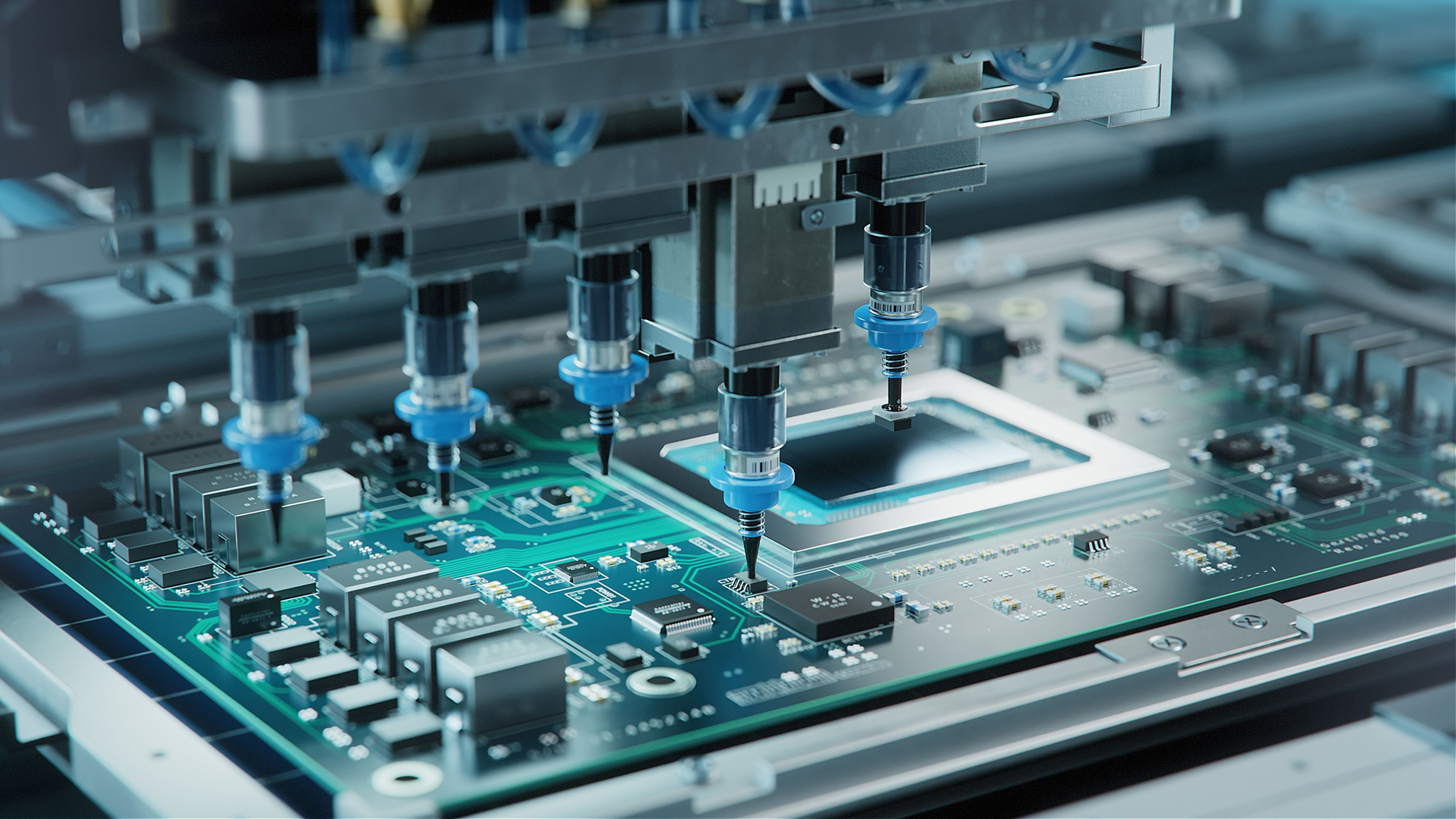
Electronics and electrical engineering are significant key and cross-sectional technologies for numerous industrial applications. NMB focuses on the development of innovative materials and hybrid combinations, particularly in the areas of conductive materials, electromagnetic shielding materials and 3D-printed materials. Our approach includes FEM simulations, comprehensive sustainability assessments, and precise component testing. This ensures solutions that offer high performance, sustainability, and reliability, meeting the demands of modern industry.
Market trends
New material solutions
Increase in efficiency and performance
Substitution of resource-critical materials
Innovative product design
Circular economy
Focus Areas for Materials
Circuit
Electrical and thermal conductivity
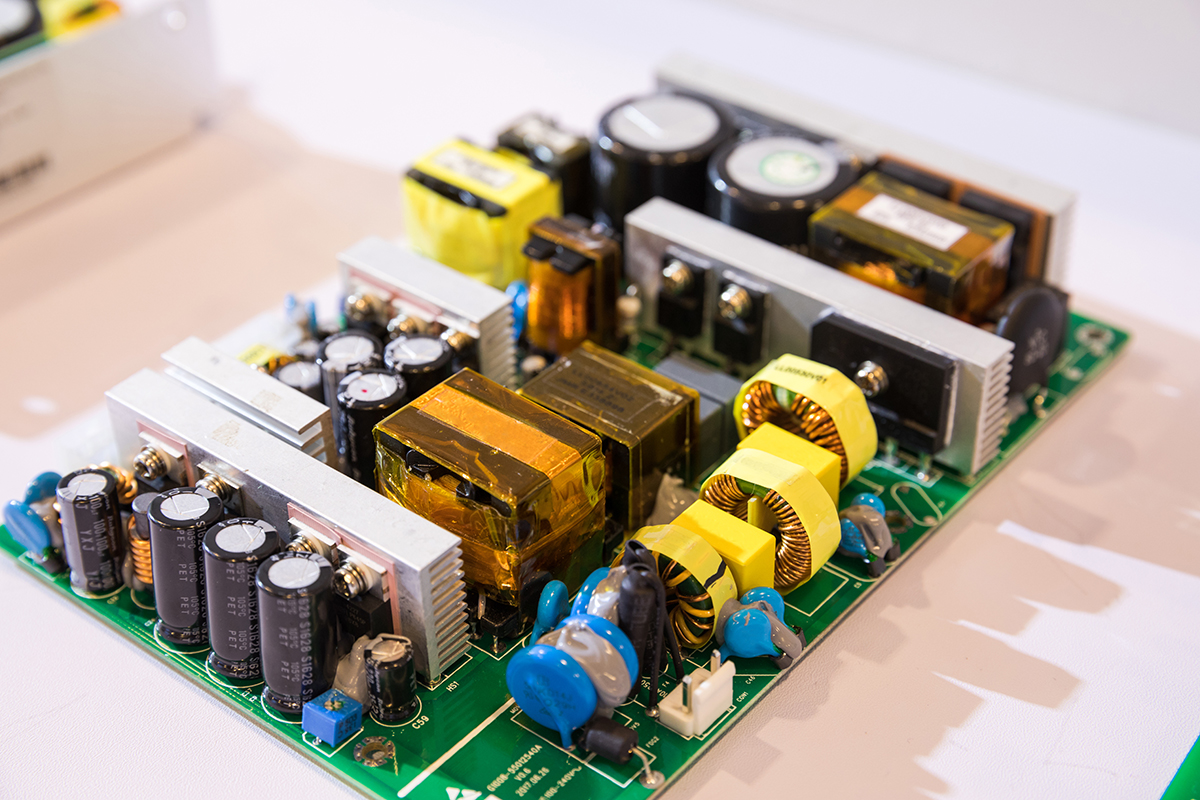
In electronics and electrical engineering, the choice of suitable materials is a crucial success factor. Conductive materials form the backbone of modern technologies – they enable efficient power transmission and ensure stable, durable connections in a wide range of applications. Thanks to our many years of experience, we provide comprehensive support in selecting and optimizing suitable materials. We work with both established metals such as copper, aluminum, silver, and gold, as well as modern composite materials, conductive polymers, and innovative nanotechnology materials like graphene.
Our expertise extends from precise material selection to the development of tailored solutions and informed consulting regarding electrical and thermal conductivity. Our focus is always on the use of forward-looking materials – to realize powerful and sustainable technologies together with you. The targeted use of recycled materials plays an increasingly important role in the development and manufacturing of electronic and electrical products – and is therefore an essential part of our sustainable material strategy.
EMC Coating for Plastic Housings
Electromagnetic shielding
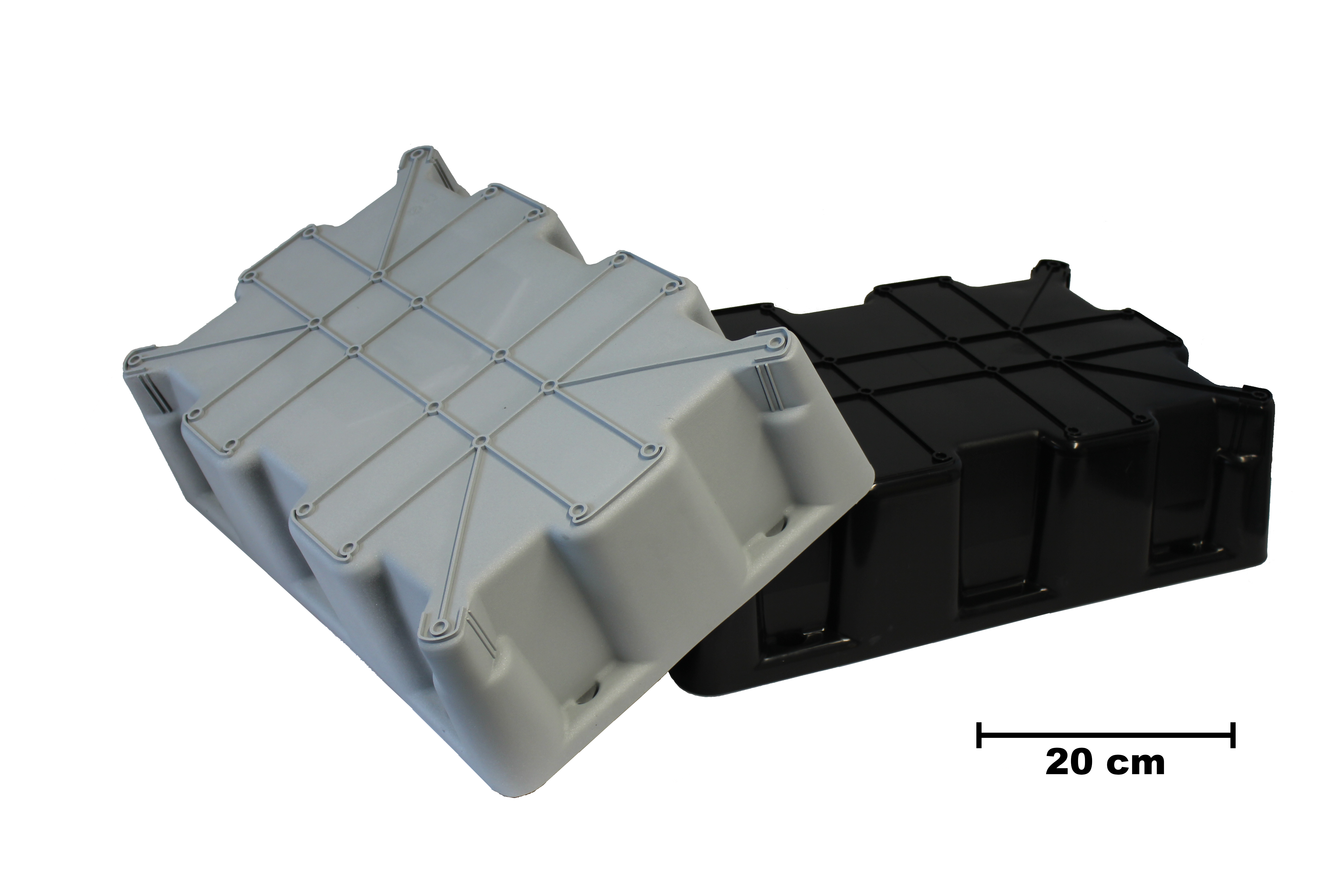
The protection of electronic systems from electromagnetic interference (EMI) is essential for their function, safety, and reliability – especially in sensitive areas such as medical technology, communication, automotive, or aerospace.
Our expertise lies in the targeted selection and development of materials with high shielding effectiveness while maintaining optimal mechanical, thermal, and processing properties. Whether for housings, circuit boards, cable shields, or flexible shields – we offer tailored solutions that ensure electromagnetic compatibility (EMC) and meet the highest technical requirements.
We develop innovative solutions based on metallic shielding materials, polymeric materials, and hybrid material systems. We employ state-of-the-art manufacturing technologies – including cold gas spraying, plasma spraying, and arc spraying – to precisely apply high-performance EMC protection layers to simple and complex components. This allows us to create customized shielding solutions that meet the highest technical demands.

Lightweight Materials
3D-printed components
The rapid development of 3D printing technology is revolutionizing electronics and electrical engineering and opening new perspectives for innovative product solutions. 3D-printed materials, such as conductive polymers, metal composites, and ceramic materials, offer numerous advantages. They enable the integration of complex geometries that would be difficult to implement with conventional manufacturing methods. Furthermore, electrical traces and circuits can be directly integrated into the components, leading to more compact designs and a reduction in manufacturing steps. By selectively using and adapting materials, we enhance the efficiency and performance of your products.
We cover a wide range of modern manufacturing technologies, from powder-based processes to filament-based methods for various material classes. Our expertise in additive manufacturing allows us to develop innovative solutions that not only meet the highest technical requirements but also support sustainable manufacturing processes. We offer comprehensive simulation-based research to analyze and optimize the thermal and electrical properties of new printed and hybrid materials.