
1
Materials
Metallic materials
Metallic materials are indispensable in many industries, but the increasing scarcity of raw materials is a challenge, especially in Europe. At NMB, we focus on resource-saving materials that do not require critical raw materials. Through simulation-based development and modern production technologies, we develop lightweight materials, high-performance alloys, composite materials and hard metals with a clear focus on resource conservation and climate protection. This enables us to offer industry-oriented products with high performance and innovative solutions.
Competencies
Development of various metallic materials
Use of data-supported methods and simulation
Mapping of the entire process chain from alloying to material and component testing
Process development with a focus on powder production, additive manufacturing and coating
Correlation of structure, process, component and properties
Materials overview
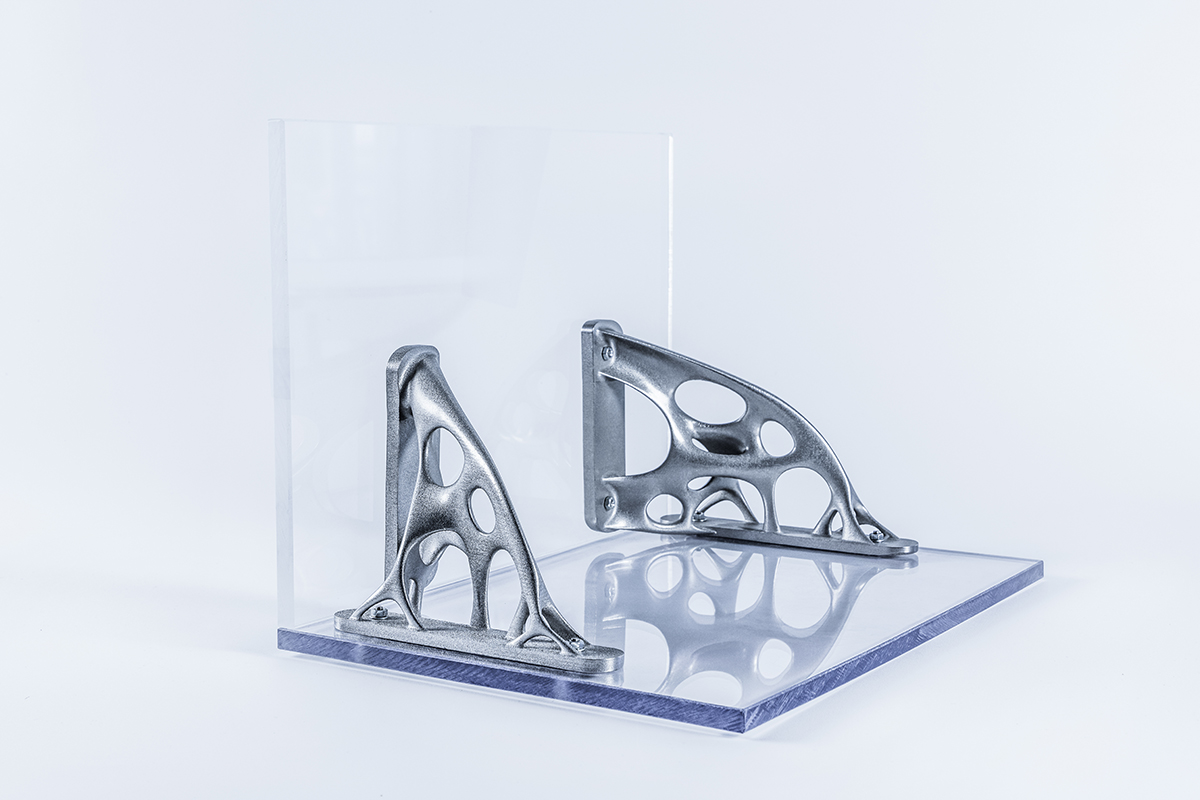
Connecting element
Lightweight materials
The development of new and the optimization of existing concepts in the automotive, aerospace and medical technology sectors requires a significant reduction in the weight of components. High-strength aluminum and titanium alloys play a decisive role here and are already established in numerous industrial applications. Future challenges lie in product design and the creation of sustainable processing methods.
Our focus is on material development and the optimization of product design for modern lightweight alloys. Using state-of-the-art simulation and AI-supported methods, we determine optimal process parameters and test the scalability of certain materials for new manufacturing processes such as laser powder bed fusion (PBF-LB/M). We also offer comprehensive advice on the heat treatment processes required to achieve the desired properties.
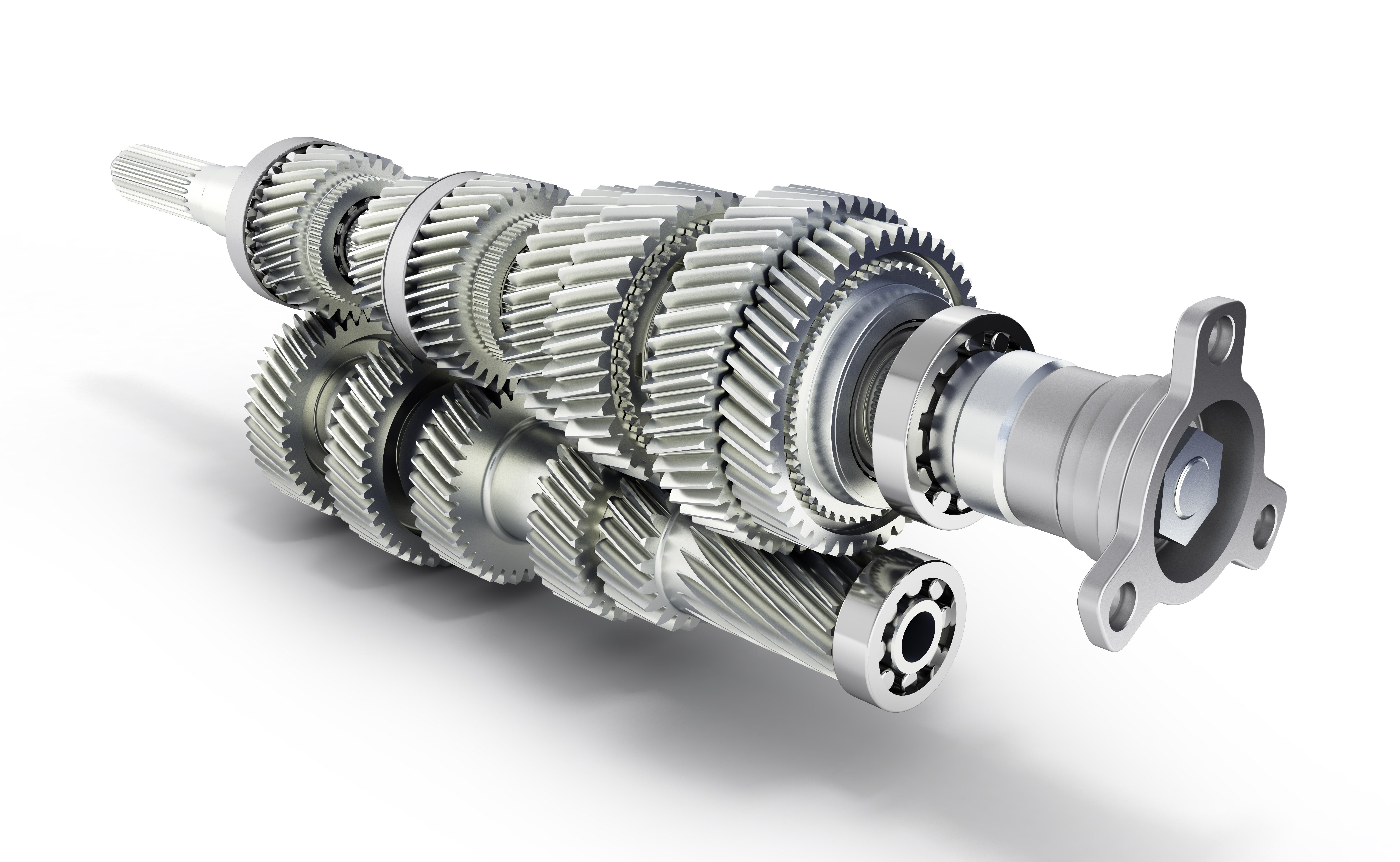
Motor gearbox
High Performance Alloys
In view of the scarcity of raw materials and climate protection, there is an increasing demand for a reduction in CO2 emissions, while at the same time the use of critical raw materials must be reduced. We are concentrating on expanding the areas of application for high-strength and ultra-high-strength steels and on developing low-density steels suitable for industrial use.
We are researching new manufacturing processes for the use of nickel- and cobalt-based high-temperature alloys, both in additive manufacturing and in coating technology. Our innovative material combinations enable a significant improvement in thermomechanical properties and oxidation resistance at higher operating temperatures.
By combining material modeling with the latest manufacturing technologies, we can develop products efficiently and in a way that conserves resources.

Non-weldable materials
Non-weldable materials
Many high-temperature materials based on iron, titanium aluminides, or nickel are currently only of limited applicability in additive manufacturing due to their limited weldability. At the same time, these materials exhibit outstanding properties, particularly with regard to creep resistance as well as oxidation and corrosion resistance at elevated service temperatures.
To systematically exploit this potential, we develop application-specific material systems as well as process-spanning manufacturing routes for the production of crack-free, high-performance components. Our holistic, process-independent approach integrates filament-, powder-, and wire-based additive manufacturing strategies, thereby enabling new degrees of freedom in material and process development.
A key element of this approach is direct in-situ alloying, which allows the use of industrially available feedstock materials to deliberately generate new, application-tailored alloy compositions. Supported by advanced computer simulations and data-driven methods, this results in robust solutions for demanding high-temperature applications – from material design to functional components.
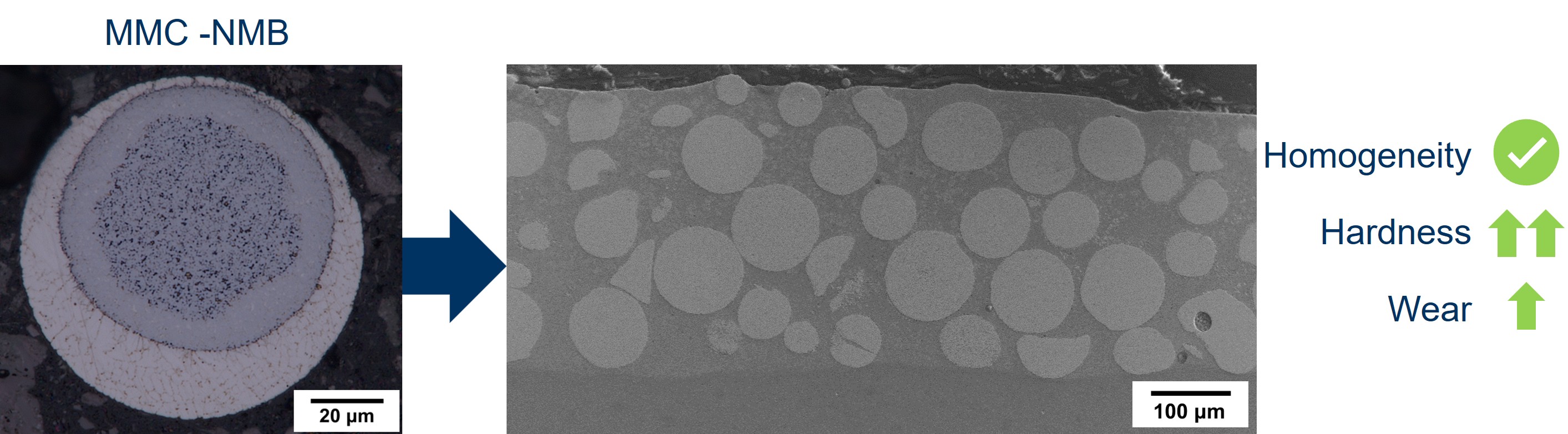
NMB developed MMC composite
Composite materials (MMC and AMC)
We develop and research extremely robust wear protection coatings based on metal matrix composites (MMC) such as WC/Co and aluminum matrix composites (AMC) such as Al2O3/Al for additive manufacturing and surface technology. Our focus is on the use of secondary raw materials and the development of new iron-based metallic matrices in order to reduce the use of critical substances. Modern, data-supported atomization technology and particle and component testing enable the development of industry-oriented products with high performance and innovative solutions.
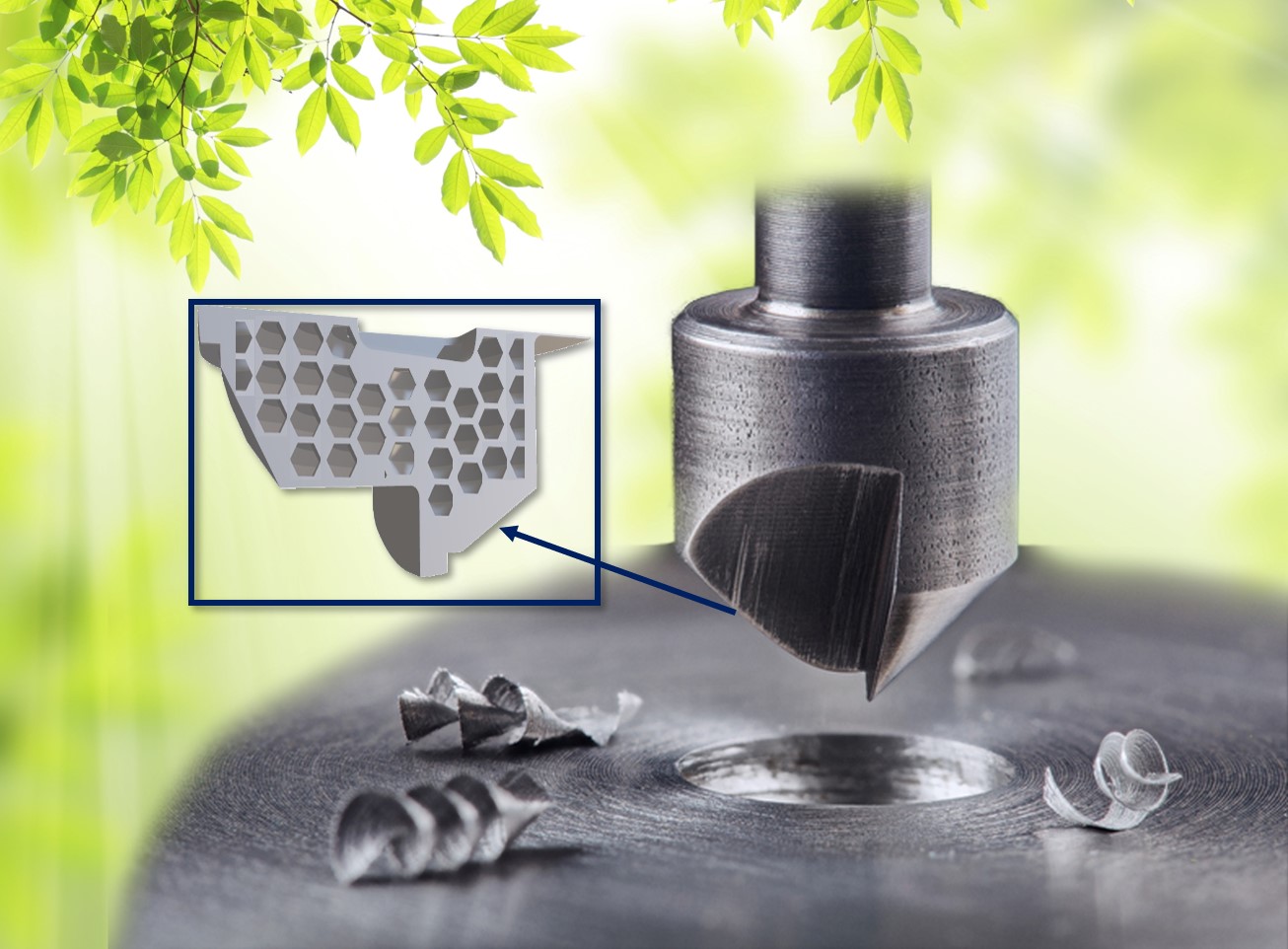
NMB developed milling heads
Hard metals
Hard metals are known for their high hardness, rigidity and resistance to pressure and wear. However, the main components tungsten carbide (WC) and cobalt are considered resource-critical materials. In order to reduce Germany's dependence on imports of these valuable materials, we are developing and optimizing production routes for the manufacture of crack- and stress-free carbides, minimizing the loss of raw materials to almost zero.
In addition, we focus on developing new product designs to reduce the use of carbides while ensuring high mechanical properties and wear resistance. The use of secondary and non-round tungsten carbide particles is also being researched for industrial applications, such as in tools.