

1
Technologies
Data-driven material research
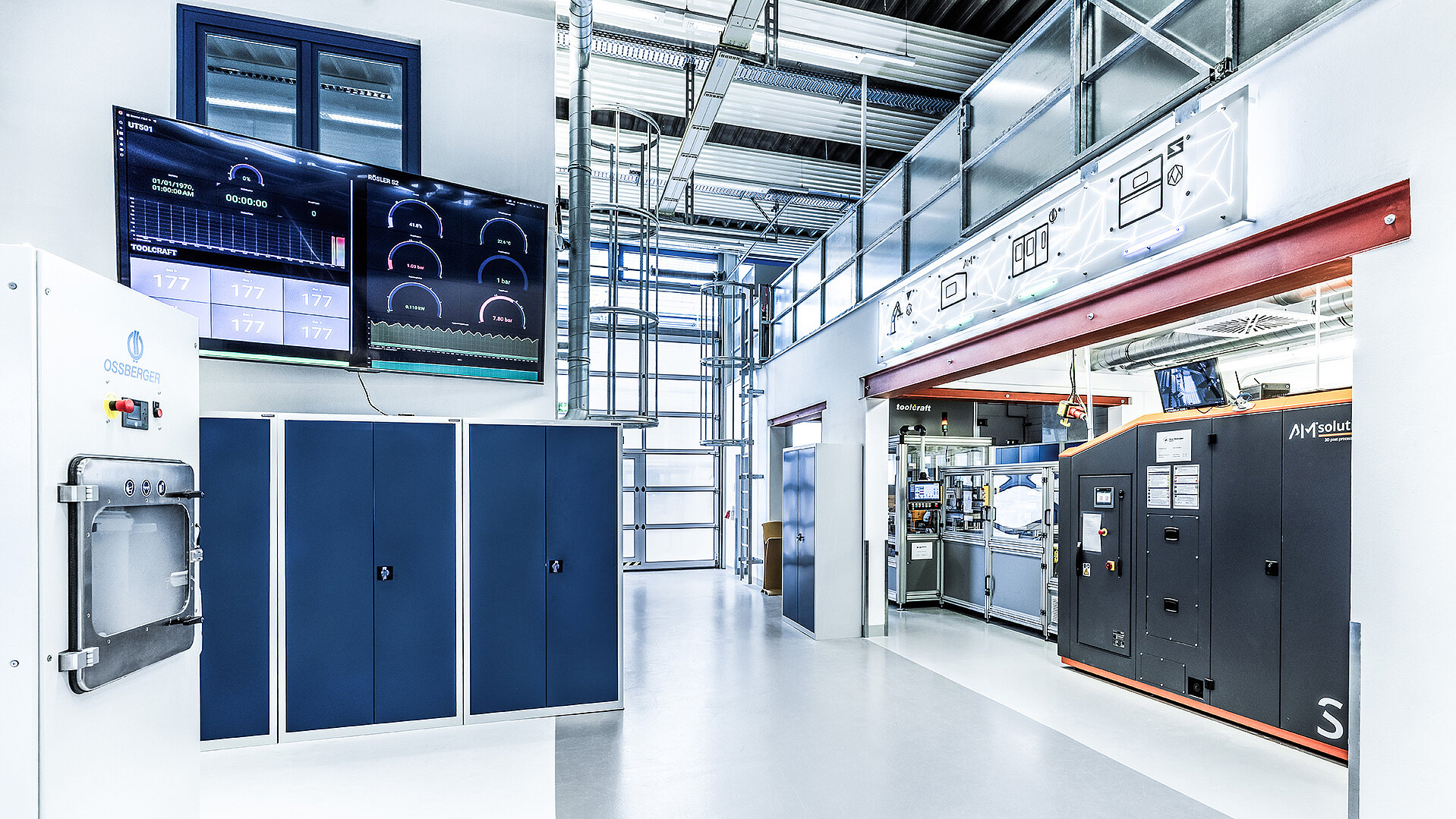
The digital transformation in material development and processing is revolutionizing the field through AI-supported design, advanced simulations, and real-time process optimization. We integrate digital technologies along the entire process chain of materials science. By using real-time data analysis and AI-supported methods, we optimize material properties, material formulations, and production processes. Our digital SLS demo factory, for example, enables the exploration of automated and connected 3D printing processes for industrial applications. These digital approaches promote faster, more sustainable, and more efficient solutions in materials and process development.
Competencies
Process monitoring and automation
Development of digital twins for material and process simulation
AI-supported analysis of material properties
Integration of Industry 4.0 technologies into production processes
Machine learning and optimization algorithms
Exploration of undiscovered material spaces
Processing overview

Process monitoring and automation
A precise and efficient monitoring of the entire production process is essential to minimize quality fluctuations, optimally utilize resources, and ensure consistently high product quality. In addition to our other facilities, the digital SLS factory sets new standards in additive manufacturing through fully automated process control. By continuously using highly sensitive sensors, we capture critical parameters such as temperature, layer build-up, and material distribution in real-time. This data is evaluated by an AI-supported analysis platform to detect potential deviations early and intervene directly in the production process. Our bidirectional OPC UA connection allows for dynamic write-back into the PLC, enabling process parameters to be adjusted in real-time. This ensures that the manufactured components exhibit the highest precision, efficiency, and reproducibility.
Simulation and optimization using digital twins
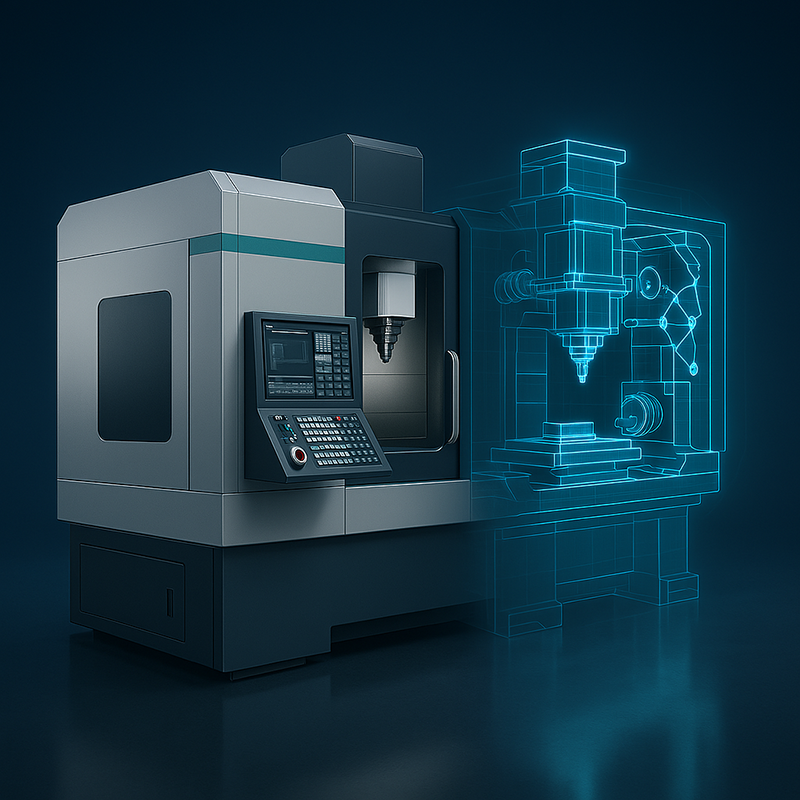
Digital twins are virtual representations of physical products or processes. Our digital twins enable precise simulation of materials and manufacturing processes even before physical prototypes are created. In lightweight construction, they optimize the waste-minimized production of fiber-reinforced tapes, while in metal 3D printing, they adjust powder production and process parameters based on simulations. In polymer processing, they accelerate the development of injection molding and foam injection molding processes.
Through the real-time integration of material data and machine-specific parameters, as well as coupling with industrial systems, we improve process efficiency and sustainability. Additionally, a life cycle assessment (LCA) allows for targeted evaluation of ecological effects.

AI-supported material development
Data-driven approaches open up new possibilities for increasing efficiency and ensuring quality in material development. By using machine learning, we can, for example, accurately predict thermal and mechanical material properties. After training specific ML models, relevant material properties can be derived from the composition or process parameters.
A convolutional neural network, for example, analyzes infrared images of individual print layers and predicts the final tensile strength of a 3D-printed component. Similarly, the glass transition temperature of a thermoset can be efficiently optimized based on the resin and hardener composition. For the targeted control of foam density, active learning techniques combined with classical ML methods enable precise predictions based on process parameters such as temperature, pressure, and residence time.
Integration of Industry 4.0 technologies into production processes
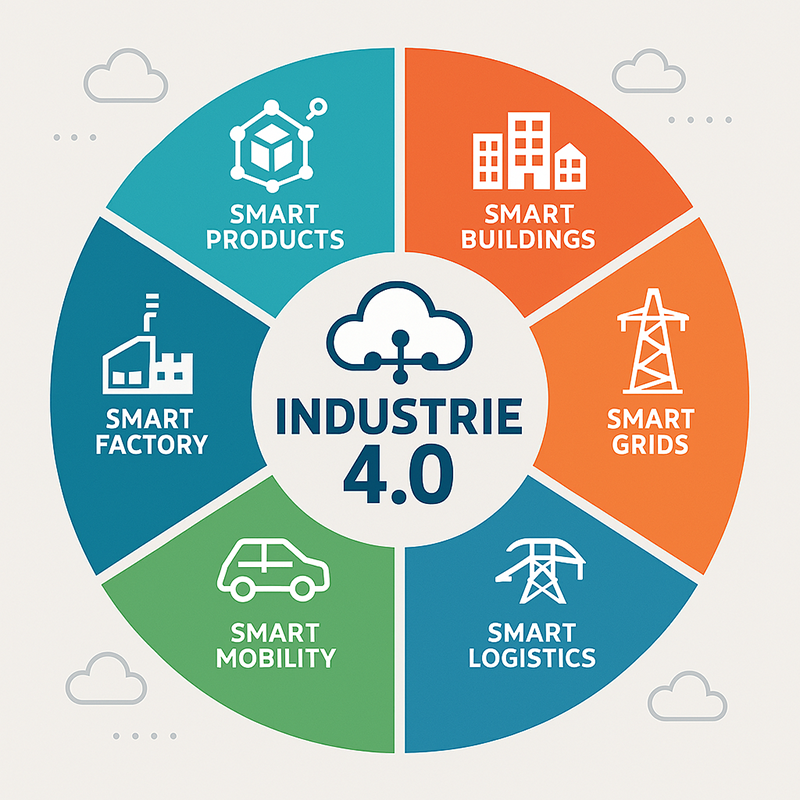
By using Industry 4.0 technologies, we optimize manufacturing processes in terms of efficiency, automation, and sustainability. In our SLS demo factory, IoT platforms enable real-time monitoring of process parameters such as temperature, pressure, and material properties. Digital twins simulate machine and material behavior to optimize process chains and reduce scrap.
A connected system of Farsoon printers, Ossberger powder management, and Rösler surface treatment forms an automated production line with inline quality control. At the same time, sensor-based powder monitoring allows for a recycling rate of up to 85%. By reducing manual interventions and data-driven process adjustments, we lower operating costs and increase sustainability.

AI-supported process optimization
We use reinforcement learning to optimize production processes based on data. Real-time analyses and prediction models control material properties and process parameters more precisely.
An ML model, for example, predicts process sizes of foam extrusion up to five minutes into the future by analyzing real-time data. In inline quality control, AI algorithms detect surface defects of coatings within seconds. Automated process maps enable tailored parameterization of additive manufacturing processes.
By utilizing high-performance computers from the University of Bayreuth and connected sensors, we combine classical simulation methods with AI.
Exploration of undiscovered material spaces
Through high-throughput screening (HTS), we enable the parallel analysis of numerous samples using robotics and automated systems, significantly accelerating and making material research more cost-effective. We rely on advanced methods of data extraction, curation, and organization to make large amounts of experimental data usable. Machine learning models assist us in accurately predicting material properties and purposefully designing novel polymers. Big data techniques and AI-supported synthesis planning are employed to optimize the development process. Another central research area is knowledge discovery (KDD), where we extract patterns from large data sets through rule mining and reveal hidden relationships that would not be visible with conventional analysis methods.