

1
Materials
Composite materials
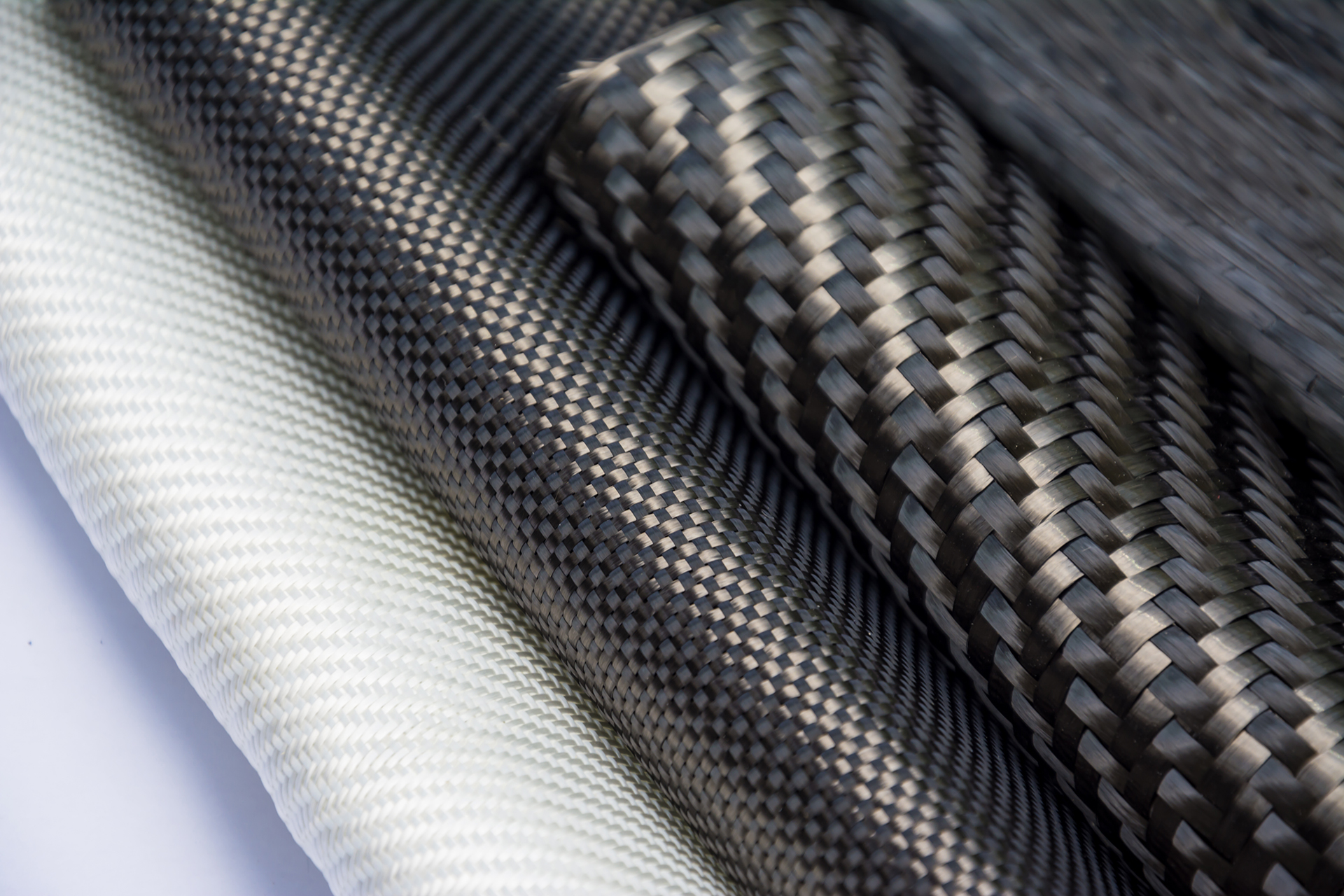
We develop composite materials, from thermoset to thermoplastic materials. The outstanding load transfer of continuous fiber-reinforced materials is ideal for highly stressed applications, e.g. in the automotive and aerospace industries. With a focus on material and process development for industrial applications, we create components with excellent properties and efficient production. Through close cooperation with industrial partners and university research, we bring innovative solutions directly into practice and promote technological progress for a sustainable future.
Competencies
Modification of thermoset matrices for the production of semi-finished products by means of prepreg production and fiber spreading
Production of thermoset fiber composites using RTM and winding systems and AFP
Industrialization of thermoplastic composites from tape laying to thermoforming/overmolding
Digital process control for efficient manufacturing processes
Characterisation of process-structure-component properties
Application-oriented material and process optimization
Materials overview
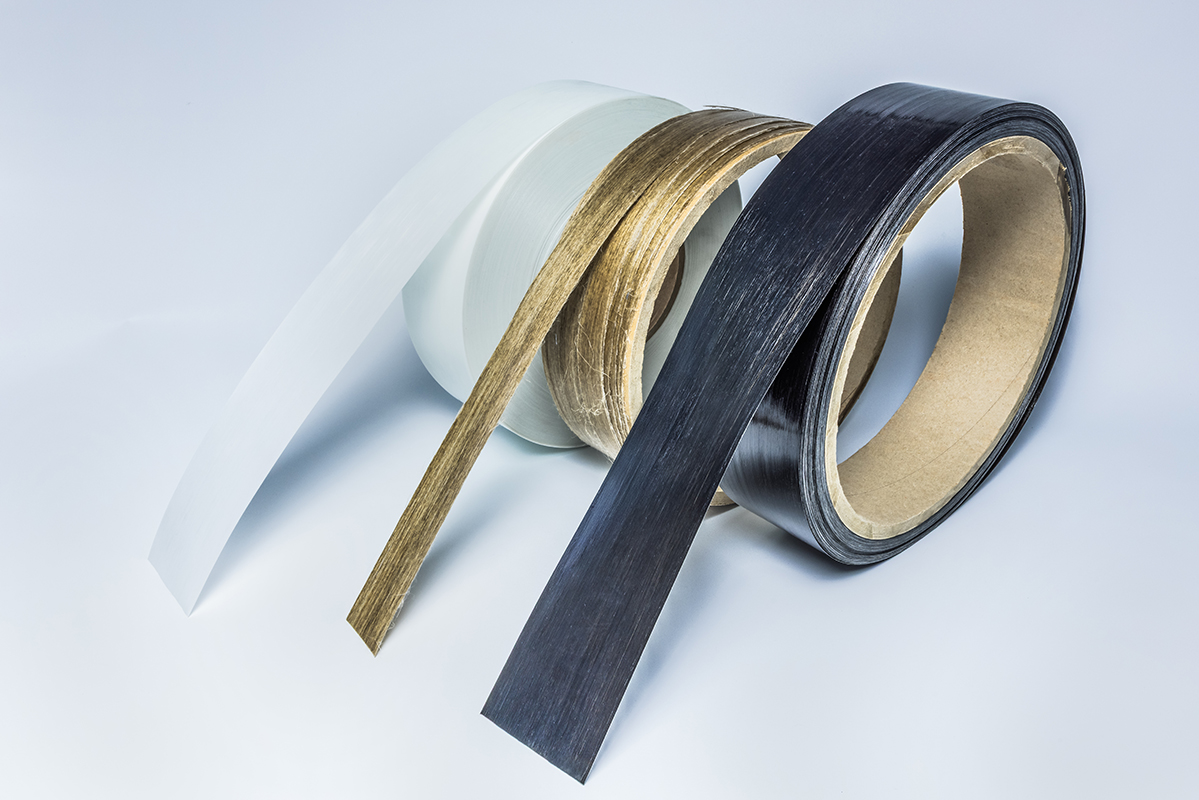
Thermoplastic fiber composite tapes
Thermoplastic semi-finished fiber products
We develop and process semi-finished thermoplastic fiber composites such as organosheets. These materials consist of continuous fiber-reinforced thermoplastics (e.g. PP, PA, PEEK) with glass, carbon or aramid fibers and enable use in industrial applications thanks to their high rigidity and strength combined with low weight. The organosheets are produced by processing unidirectional (UD) tapes on the company's own multiaxial tape laying system, which enables fabric sizes of up to 1.5 x 1.5 m and offers high efficiency by parallelizing cutting, laying and welding. Hybrid lays can be created by combining different fiber types or directions. The consolidated organosheets can be combined with fabrics to achieve customized properties. In the further process, the semi-finished products are formed by thermoforming or functionalized by injection overmolding, e.g. through local reinforcements. Sandwich structures are created by joining organosheets with bead foam cores, whereby NMB focuses on adhesive-free joining processes for semi-finished thermoplastic products. The entire process chain - from tape laying to the finished component - is optimized for short cycle times and minimal material losses.
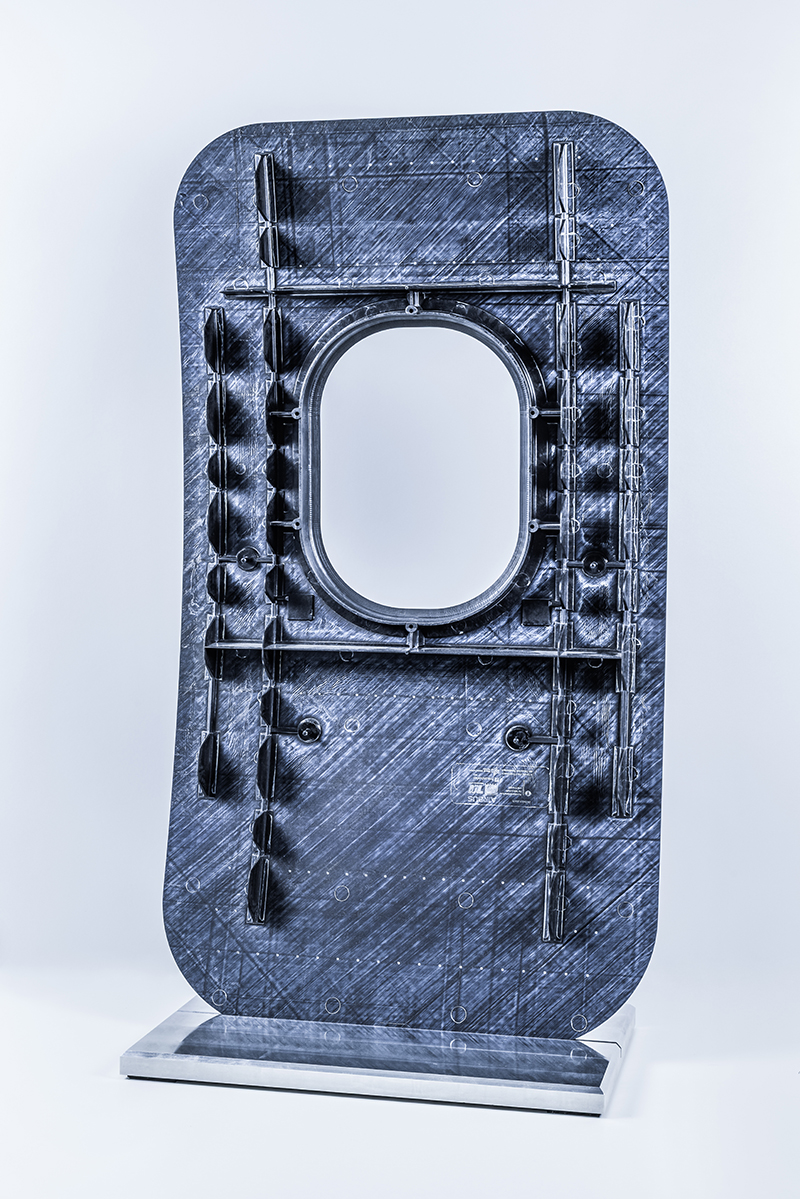
Technology demonstrator: Emergency exit door made of thermoplastic fiber composite
Thermoplastic composites
Thermoplastic fiber composites are becoming increasingly important as they offer significant advantages over thermoset composites. They are more impact-resistant, easier to recycle and enable shorter production times thanks to melt-based processing, which makes them particularly economical for use in series production. We focus on the development of efficient processing methods and the industrialization of the entire process chain. NMB optimizes the processing of semi-finished products through thermoforming and injection overmolding, whereby organosheets are formed using heat and then overmoulded with functionalizations such as ribs or attachment points using short and long fibre-reinforced compounds. A key process is the combination of pressing and injection molding in automated production cells, which achieves cycle times of less than 2 minutes. Hybrid processes such as the in-situ foaming of bead foams between preformed cover layers are also used to produce complex sandwich components. NMB is also researching sustainable material variants, including bio-based polymers and recyclable foam cores, and uses life cycle analyses to reconcile ecological and economic goals.
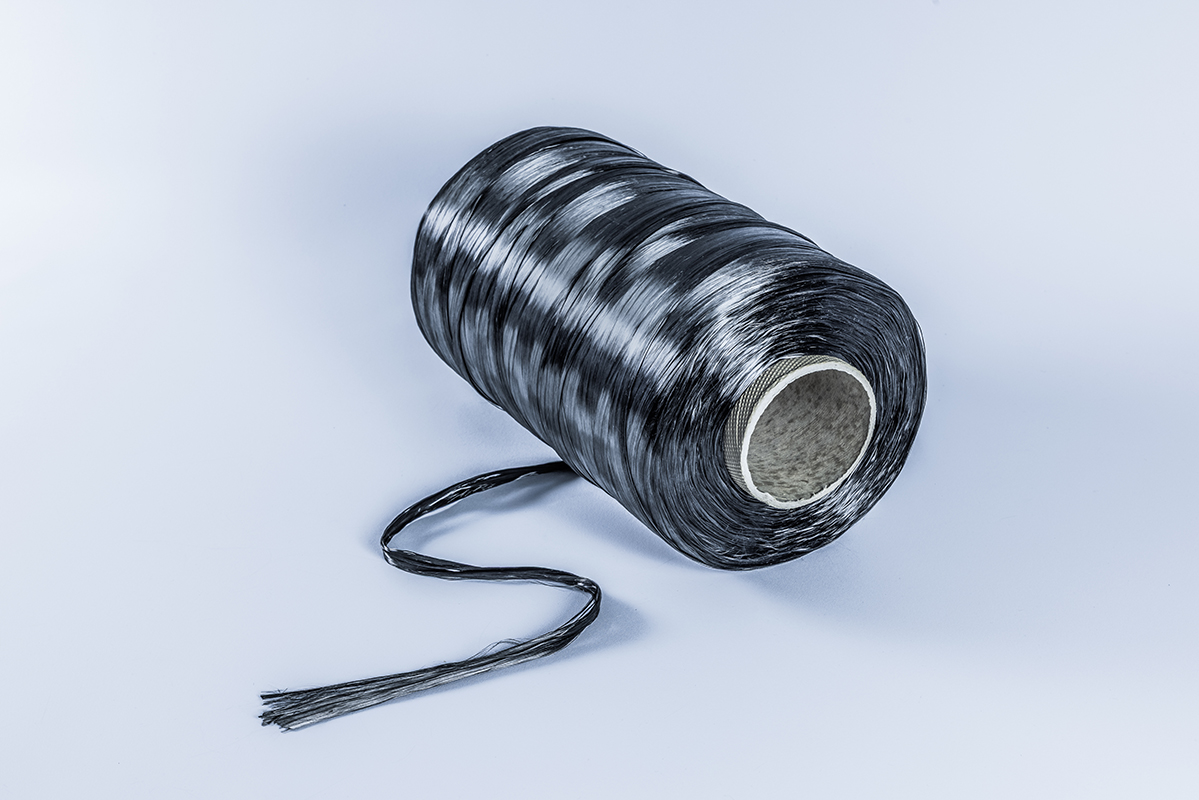
Carbon fiber roving
Thermoset semi-finished fiber products
We develop semi-finished thermoset fiber products with a focus on cost-effective high-performance solutions for automotive, aviation and H₂ tanks. Our core competencies lie in prepreg production using our in-house small-scale system (25 cm working width), which impregnates unidirectional fibers (aramid, glass, carbon or natural fibers) as well as woven and nonwoven fabrics using the hot melt process. As a further available technology a fiber spreading unit enables the processing of rovings into spread tows (C-fibers, for example, can be spread up to 35 g/m²), which are directly powder-bonded and can then be impregnated on the prepreg system. The semi-finished products - including hybrid weaves - are used in winding processes, AFP (Automated Fiber Placement) or manual lamination for autoclave applications. In addition – tailored to customer-specific requirements – 3D shaping of bonded semi-finished products is possible using the hot forming process. The process chain combines material efficiency with precise control of the resin systems (e.g. epoxies, polyurethanes) for optimum impregnation and storage stability.
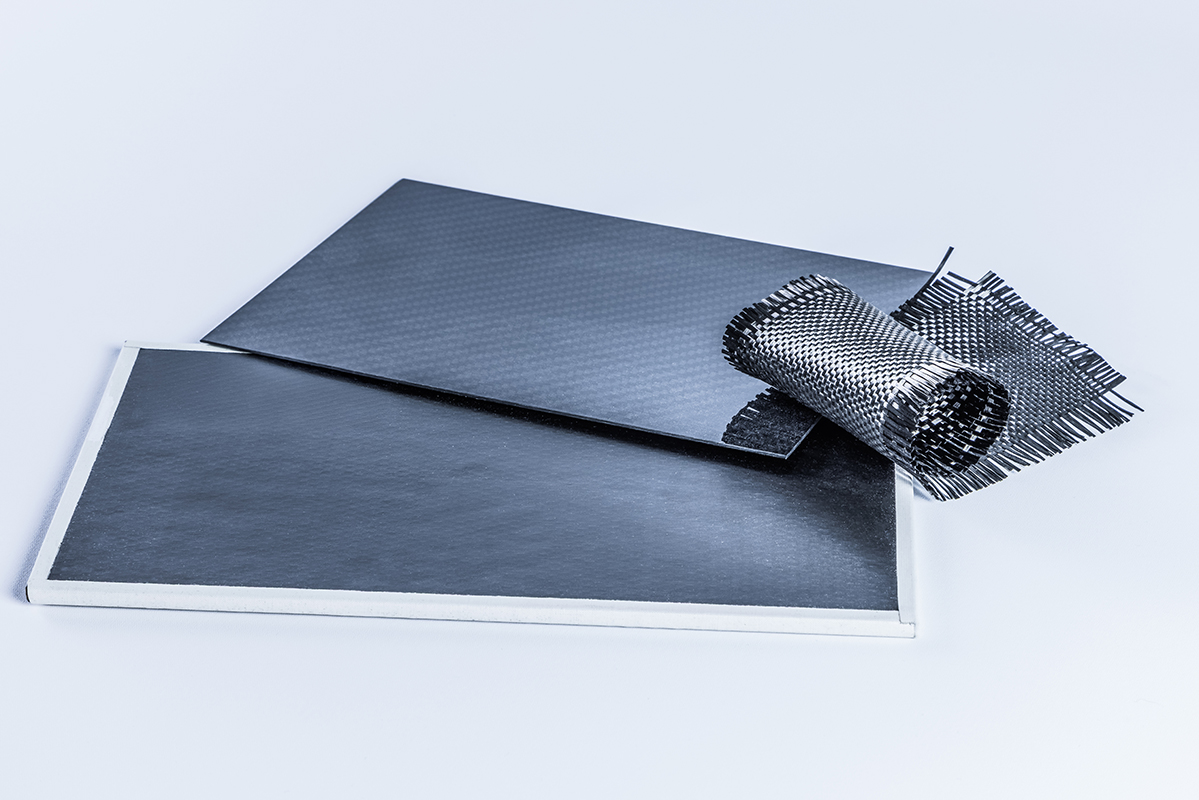
Thermoset fiber composite laminates and semi-finished products
Thermoset composites
Thermoset composites are characterized by their high temperature resistance, excellent mechanical properties and special damage tolerance. We are working on specifically modifying the polymer matrices in order to optimize properties such as toughness, processability or flame retardancy. In doing so, we take into account the rheological properties of the matrix as well as its curing kinetics to ensure economical and efficient processing. The work concentrates primarily on epoxy resins, but also includes polyester, polyurethane and acrylate resins. Another focus is on the subsequent production of fiber composite components. Research focuses on both modern and classic processing techniques for fiber composites, including resin transfer molding (RTM), vacuum infusion, towpreg and wet winding as well as automated fiber placement (AFP). This is supplemented by research on conventional autoclave processes in order to evaluate their potential and limitations in industrial use. In doing so, we benefit from our own capabilities in the production of semi-finished products, in particular prepreg production and fiber spreading including binding.
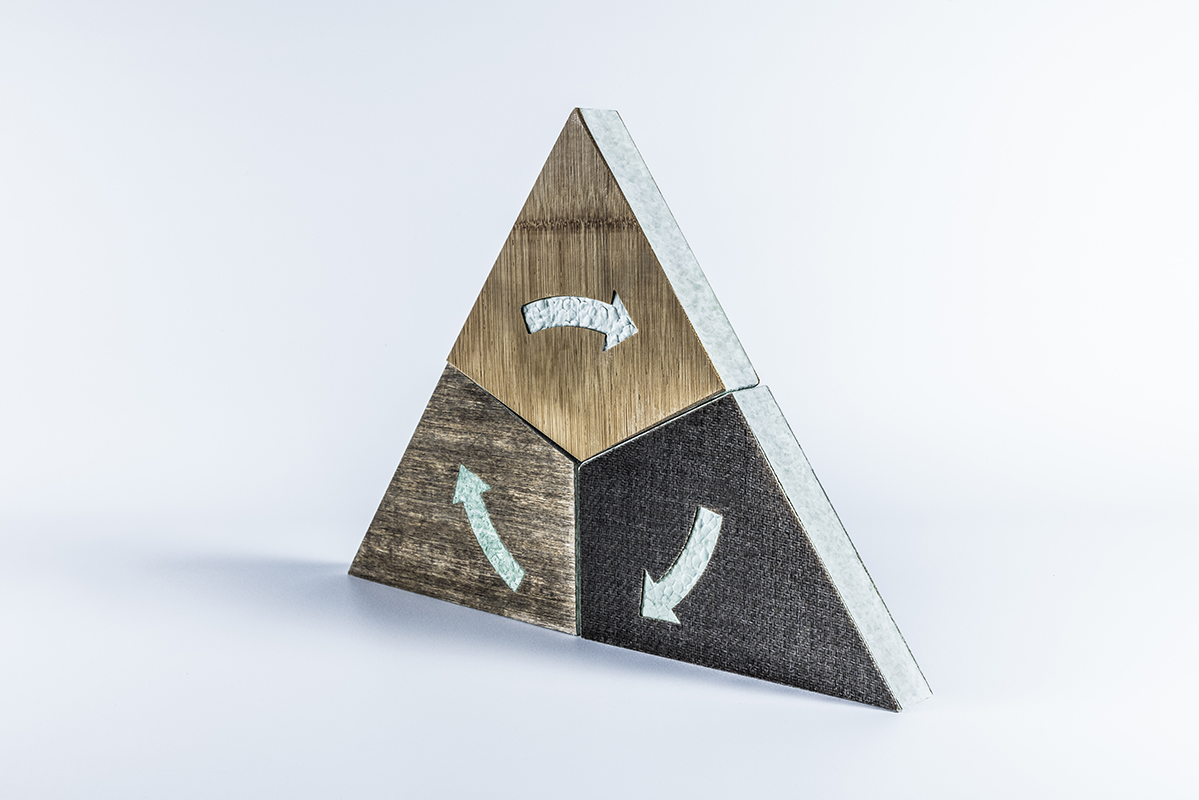
Sustainable sandwich materials
Sandwich materials
Sandwich materials are characterized by their unique structure consisting of two thin, rigid outer layers and a lightweight core material. This construction offers high bending stiffness at low weight, making them ideal for lightweight applications, for example in the transportation and construction sectors. The core materials often include cell structures such as honeycomb, wood-based materials or foams, which are known for their low density and high efficiency. Through the targeted selection and optimization of core and cover materials, we can develop tailor-made solutions that are both technologically advanced and economically efficient. Our research focuses on the further development of these materials in order to improve their mechanical properties and enable new applications in various industries. In doing so, we utilize synergies with our extensive manufacturing capabilities of batch, extrusion and particle foam. With regard to the circular economy in particular, we also enable single-material concepts with cover and core layers made from identical matrices.