

1
Case StudySTEP
Scalable E-Thermoparkett
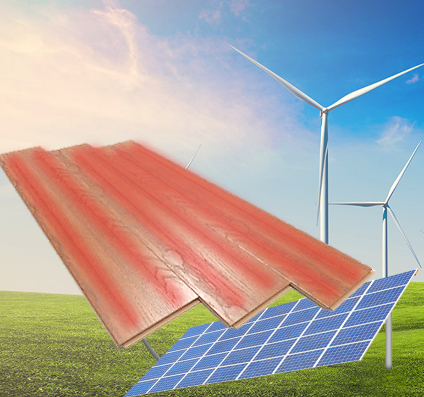
In order to realize the energy transition in the residential sector as well, the conversion of room heating systems to renewable energies by the end of this decade is an important measure. The climate package of the federal government already provides for a ban on new oil heating systems starting in 2026, and it is already evident today that the supply of gas represents a strongly limiting factor. Electric energy is a medium that is practically available everywhere, which – when generated from renewable energy sources – can also be used for heating living spaces.

Motivation
Successful transition to renewable energies in the residential sector by reducing fossil resources for building heating.

Approach
Sustainable construction means using resources responsibly, creating energy-efficient buildings, and securing long-term benefits for people and nature in the future through research and development.

Motivation
Efficient electric underfloor heating integrated directly into the parquet
Currently, electric surface heating systems for underfloor heating exist only as heating films that are laid under the floor covering, which is associated with low energy efficiency. Against this background, STEP focused on developing a novel, effective, and energy-efficient electric underfloor heating system with an innovative system structure. The idea was to integrate the heating elements directly into the top layer of the floor structure, i.e., into the parquet panel, while employing intelligent control for heating up.

Solution Approach
Integration in the layer composite and contacting via click system
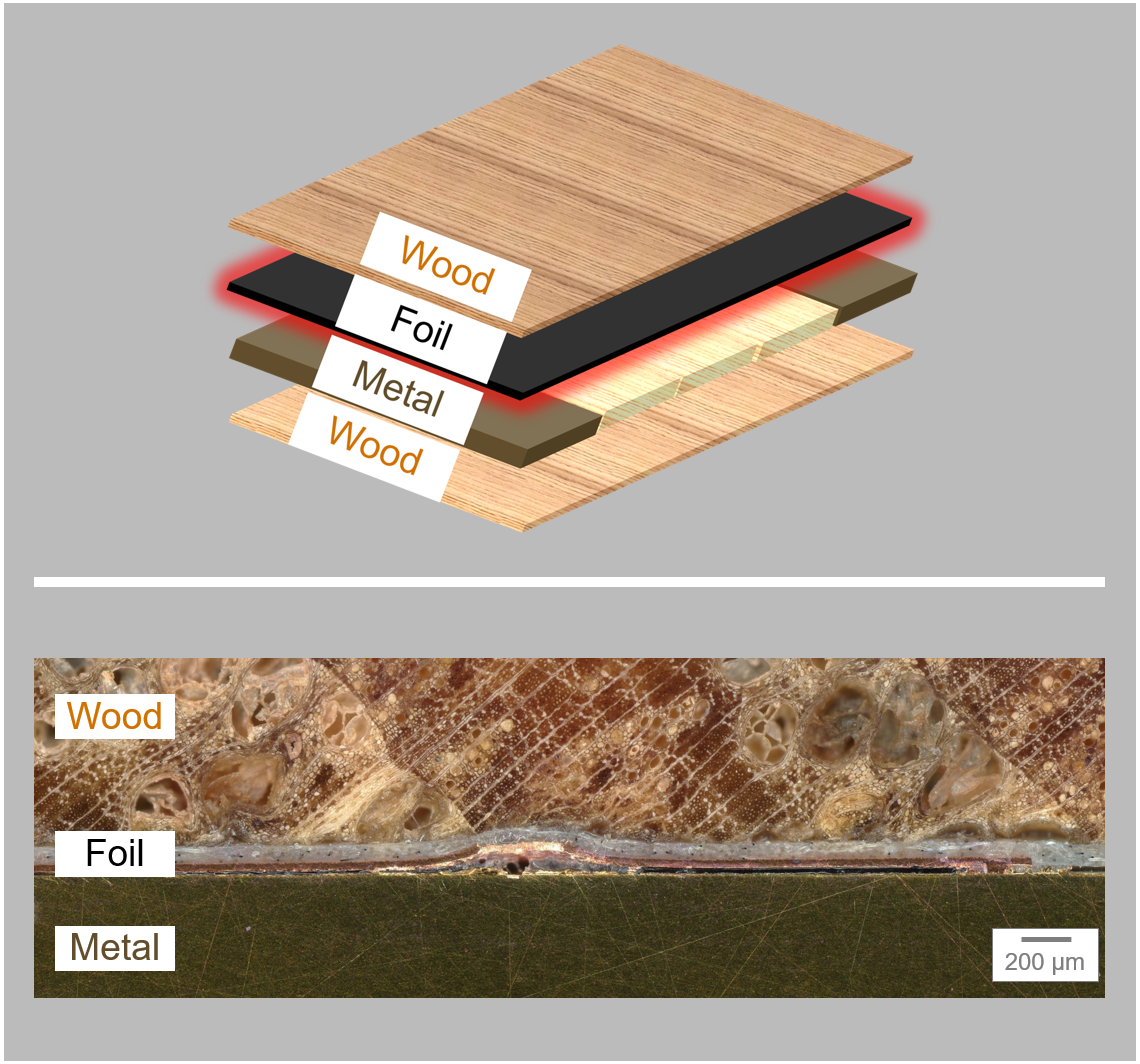
The contacting between the panels is realized via a brass insert in the click connection. This makes installation as easy as with a classic three-layer parquet without electric heating. In existing buildings, the surface heating can thus be retrofitted much more easily and cost-effectively than, for example, a water-based surface heating system. Integration into a home automation system is done via a KNX system. A room air temperature sensor with an additional IR sensor captures the actual temperature. The control of the room temperature and communication with the KNX network is handled by the integrated microcontroller.
Approach
Prototype realized with heating film as an efficient heat source
As a result, a functional prototype was created in the STEP project, which was realized from several connected panels in a three-layer structure. The perforated heating film was integrated as a heat source under the top wooden layer. The contact between the panels was made via metal inserts in the click connection.
- Easy installation: The heating film can be installed just as easily as classic three-layer parquet, without the need for complex installation of electric heating.
- Cost-effective retrofitting: The surface heating can be retrofitted in existing buildings without the need for extensive renovations as with water-based heating systems.
- Efficient heat source: The perforated heating film ensures uniform and effective heat distribution under the wooden layer.
Project sponsor: Federal Ministry for Economic Affairs and Energy (BMWE), Central Innovation Program for SMEs (ZIM) | Funding code: KK5027506BU1
Partners: ARCUS Electronic Design Services GmbH, Eberswalde University for Sustainable Development, Weitzer Wärmeparkett GmbH, Weitzer Woodsolutions GmbH