
Preparation according to plan instead of standard recycling: High-quality PCR recyclate through a combination of process management and analytics
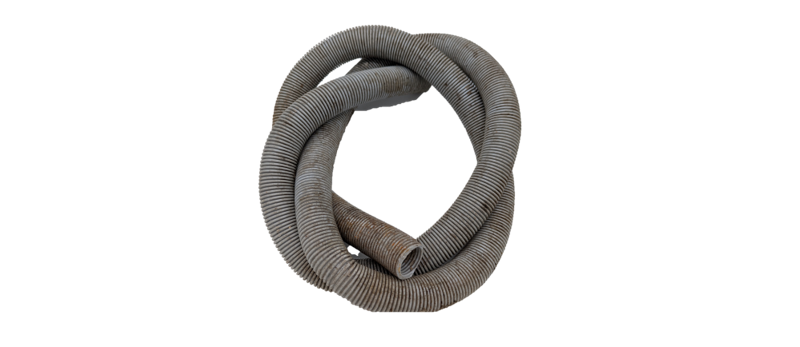
Serve as secondary plastics for systematic preparation processes: Washing machine hoses as demonstration material © PA GmbH https://we-are-pa.com/
The preparation of post-consumer plastics often fails in practice not due to their fundamental recyclability, but due to their specific contaminants and olfactory burdens. Therefore, an effective pre-treatment of the waste material is crucial for the quality of the recyclate obtained. At the same time, industry and research face the challenge of keeping ecological and economic sustainability in mind.
At Neue Materialien Bayreuth GmbH (NMB), these questions are systematically investigated under realistic conditions. The central approach is the targeted identification of those preparation processes that significantly determine the quality of the recyclate. In the recycling technology center of the non-university research institution, real material flows are analyzed, processed, and scientifically accompanied, rather than evaluating individual processes in isolation. By combining flexible plant technology with detailed material analytical support, robust statements can be derived about which process and process management variants are technically sensible, reproducible, and scalable.
As demonstration material, washing machine hoses made of polypropylene are used. They are representative of many post-consumer plastics that are fundamentally well recyclable, but whose reuse is limited by contaminants and odor. This material allows for the exemplary investigation of typical challenges in mechanical preparation.
One focus is on the investigation of washing processes. In variable experimental series, different washing mechanisms, temperatures, and additives are employed. The effectiveness of these processes is not determined solely visually or subjectively, but is evaluated using analytical methods. This allows for an objective determination of the extent to which organic contaminants and odor-relevant substances are removed.
Through this combination of process management and analytics, NMB generates a robust data basis. This provides NMB's research partners not only with qualitative assessments but also with traceable decision-making bases for process design, investments, and product strategies.
The results clearly show that washing processes have a measurable impact on recyclate quality. Using thermal analysis, it has been demonstrated that washing steps significantly reduce the organic contamination of the waste material. Unwashed materials show significantly higher residues, which can still be detected even after compounding.
The comparison of different washing variants provides an important insight: More elaborate processes, such as hot washing with citric acid, do not necessarily lead to better cleaning performance. Both TGA and GC-MS analyses show very similar results between purely mechanical friction washing and hot washing. At the same time, the ecological footprint of hot washing is significantly larger due to higher energy and water consumption.
Relevant preparation processes could also be identified concerning olfactory burdens. Individual volatile substances can be reduced through suitable washing processes. At the same time, it became clear that washing processes alone are not sufficient to remove all odor-relevant components. This necessitates complementary deodorization steps, which are also piloted in the NMB recycling technology center.
Only through understanding the relationships between contamination, odor, and material properties on one hand, and preparation processes and process parameters on the other, can robust material-specific process windows for preparation be defined. These findings are not limited to waste washing machine hoses but are transferable to other plastic streams.
With the recycling technology center, NMB positions itself as a research partner for the industrial circular economy. The approach combines experimental research, analytical depth, and practical process development – with the goal of making recycling processes not only possible but also technically and economically sensible.
Contact Person
Dr.-Ing. Katharina Krause
Chief Sustainability Officer / CSO
+4992150736111